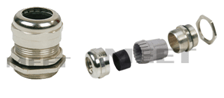
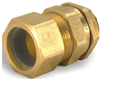
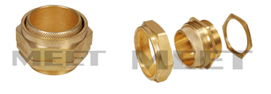
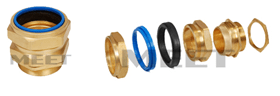
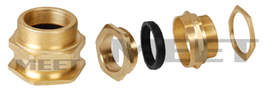
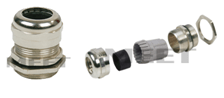
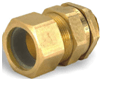
Type of Cable Gland

Cable Glands

  • A device designed to permit the entry of cable in to electrical equipment which provide sealing ,retention and earthing, bonding, grounding, insulation, strain relief or combination of all these.
  • Gland should maintain overall integrity of enclosure in to which it is to be fitted.

Gland Selection

  • Gland should be selected on following Points
  1. Type of Cable
  2. Gland Size
  3. Entry Type/Thread Specification of application
  4. Ingress Protection required.
  5. Material
  • Type of Cable:
  • Unarmored: Unarmored Cable will require outer seal within Gland to not only Provide ingress protection but also degree of retention.
  • Armored: Gland that required clamping mechanism to terminate the armored both mechanically and electrically.
  • The Gland will usually be required to provide ingress protection by sealing outer sheath and retention by clamping amour.

Type of Glands:

  1. Brass Indoor Type Gland
  2. Brass Outdoor Type Gland
  3. Brass Straitening Unarmored Cable Gland
  4. Brass Weather Proof Gland
  5. PG Threaded Gland:
  6. Industrial Type Gland

1)    Brass Indoor Type Gland

  • This Gland is quite handy in use with various types of cable whether plastic, rubberized, metal or any other.
  • Application: Dry indoor, for use with all type of SWA cables, plastic or rubber sheathed cable.
  • Brass indoor gland suitable for single wire armored, plastic or rubber sheathed cable. Recommended to use with shroud for additional ingress protection.

  • Cable Type: Steel Wire Amour.
  • Amour Clamping: Two Part Amour Lock.

2)      Brass Outdoor Type Gland

  • This come in stunning high quality material for use in outdoor or indoor application with various types of cables sheathed or unsheathed.
  • Brass indoor and outdoor gland popularly used with single wire armored.
  • Plastic or rubber sheathed cable. Terminates and secure cable armoring and outer seal grips sheath of cable thus ensuring mechanical strength and earth continuity.
  • CW brass glands are also supplied with integral earth facilities.
  • Recommended to use PVC shroud for additional ingress protection

  • Application: 
  • a)     Outdoor or indoor, for use with all type of SWA cables, plastic or rubber sheathed cable.
  • b)    Most suitable for SWA, plastic of rubber (Elastomeric) sheathed cables.
  • c)     Used in dry indoor conditions.
  • d)    No loose parts and easy to install.
  • e)     Save times & money.
  • Gland size: 20 mm to 75 mm (S & L)
  • Accessories :Earth Tag, PVC Shroud, Neo prime Rubber & LSF Rubber, PVC Washer, Brass Lock Nut.
  • Cable Type: Wire Braid Armor.
  • Armor Clamping: Three Parts (With Lock Nut).

(3) Brass Straitening Unarmored Cable Gland

  • Nickel plated or natural brass A2 type cable glands are used with variety of unarmored or rubber sheathed cables.
  • Brass indoor and outdoor cable gland suitable for all types of unarmored cables, plastic or rubber sheathed cables.


  • Application:
  1. For use with unarmored elastomeric and plastic insulated cables. 
  2. Indoor & Outdoor whenever it is required to provide sealing on cable outer sheath.
  • Size  : Metric – 20mm to 75mm (S/L)
  • Accessories: Earth Tag, PVC Shroud, Neo prime Rubber & LSF Rubber, PVC Washer, Brass Lock Nut.
  • Cable Type : Unarmored

4)    Brass Weather Proof Gland

  • Unlike other types of cable glands, This type cable gland is used precisely with single armored various types of swa cables whether plastic or rubber sheathed ones. this type cable gland is known for its uninterrupted services once the gland is fixed to the desired wires and wire components.
  • Suitable for SWA or rubber sheathed cables.
  • Outer seal grips bedding layer of cable for use in most climatic conditions.
  • Weather proof and water proof.
  • Design has separate armor lock rings. Can be supplied with integral earth facility.
  • Gland size: 20 mm to 75 mm (S & L)


  • Application :
  1. Outdoor or indoor, for use with single armored, all type of SWA cable, plastic or rubber sheathed cable.
  2. E1W Gland is Weatherproof & Waterproof Cable Gland
  • Cable Type :  Steel Wire Armour
  • Armour Clamping: Three Part Armour Lock
  • Sealing Technique: Compression & Displacement Type
  • Sealing Area(s): Inner & Outer Sheath

5)    PG Threaded Gland:

  • Nickel chrome plated PG threaded cable gland is a custom made threaded gland to meet the needs from the meet industries. Apart from the round headed PG threaded cable gland, we also offer hexagonal gland or any other like spherical rectangular or any other dimensional PG threaded cable gland as per the specification of the customer.


6)      Industrial Cable Gland:

  • Brass gland suitable for wire braid armored, plastic or rubber sheathed cable. Terminates and secure cable armoring and outer seal grips sheath of cable thus ensuring mechanical strength and earth continuity.
  •  Recommended to use PVC shroud for additional ingress protection


  • Cable Type: Wire Braid Armour
  • Armour Clamping : Three Part (With Lock Nut)
  • Sealing Technique: Compression Type.
  • Brass gland suitable for steel tape armored, plastic or rubber sheathed cables. Terminates and secure cable armoring and outer seal grips sheath of cable thus ensuring mechanical strength and earth continuity.
  • Recommended to use PVC shroud for additional ingress protection
  • Cable Type : Steel Tape Armour
  • Armour Clamping : Three Part (With Lock Nut)
  • Sealing Technique: Compression Type.

 What is difference between Single Compression and Double Compression?

  • Double compression glands provide extra support to the heavy armored cables entering or exiting the panel while single compression glands are used for light armored cables.
  • Normal Cable Gland is also called Single Compression Cable Gland. As the name suggests, while you tighten the gland, the grip or compression is effected only at one p [lace (i.e.) at the cable armour only. There is scope for moisture and corrosive vapour to enter the gland and thus into the cable.
  • Whereas in Double-Compression Gland, the compression happens both at the cable armour as well as at the inner sheath. This is sort of two sealing. Hence, chances of moisture or vapour entry are minimised. Hence these glands are also known as Weather-proof cable glands or Flame-proof cable glands.
  • The basic difference between single and double compression

1)    Parts of Double comp

  • Gland body
  • Gland body Nut
  •  Cone
  • Cone Ring
  •  Neopen Rubber seal.
  •  Rubber Washer
  •  Check Nut.

2)    Single Comp Parts

  •  Gland body
  • Gland body Nut
  • Neopen Rubber seal.
  • Rubber Washer
  • Check Nut
  • Flat washer
  • The Basic difference between Single and Double Comp is in Single comp there no cone and cone ring.
  • The mechanical support for the cable is only Neopen rubber seal, When u tighting the cable.
  • In double camp gland the mechanical support to the cable only cone and cone ring. When doing glanding the cable armor sits on the cone and cone ring act as a lock for armor.
  • Single compression and double compression glands are used on the basis of area classification. Those who are affiliated with oil and gas sector they will easily understand about area classification.
  • In zone 0 where the presence of hydrocarbon is obvious (IIC) double compression gland is used because the flame path in case of double compression gland is much more than in case of single compression gland.
  • The logic behind this is that if there is any explosion inside the terminal box of the motor no flame should be able to come out through the cable gland in order to prevent fire hazards but where there is no presence of hydrocarbons i.e. no danger of fire hazards (IIA/ IIB) single compression glands are used.
  • It has nothing to do with mechanical strength. Even in case of lighting fixtures used in IIC zone double compression glands are used.

Type of Gland

Cable Glands

  • A device designed to permit the entry of cable in to electrical equipment which provide sealing ,retention and earthing, bonding, grounding, insulation, strain relief or combination of all these.
  • Gland should maintain overall integrity of enclosure in to which it is to be fitted.

Gland Selection

  • Gland should be selected on following Points
  1. Type of Cable
  2. Gland Size
  3. Entry Type/Thread Specification of application
  4. Ingress Protection required.
  5. Material
  • Type of Cable:
  • Unarmored: Unarmored Cable will require outer seal within Gland to not only Provide ingress protection but also degree of retention.
  • Armored: Gland that required clamping mechanism to terminate the armored both mechanically and electrically.
  • The Gland will usually be required to provide ingress protection by sealing outer sheath and retention by clamping amour.

Type of Glands:

  1. Brass Indoor Type Gland
  2. Brass Outdoor Type Gland
  3. Brass Straitening Unarmored Cable Gland
  4. Brass Weather Proof Gland
  5. PG Threaded Gland:
  6. Industrial Type Gland

1)    Brass Indoor Type Gland

  • This Gland is quite handy in use with various types of cable whether plastic, rubberized, metal or any other.
  • Application: Dry indoor, for use with all type of SWA cables, plastic or rubber sheathed cable.
  • Brass indoor gland suitable for single wire armored, plastic or rubber sheathed cable. Recommended to use with shroud for additional ingress protection.

  • Cable Type: Steel Wire Amour.
  • Amour Clamping: Two Part Amour Lock.

2)      Brass Outdoor Type Gland

  • This come in stunning high quality material for use in outdoor or indoor application with various types of cables sheathed or unsheathed.
  • Brass indoor and outdoor gland popularly used with single wire armored.
  • Plastic or rubber sheathed cable. Terminates and secure cable armoring and outer seal grips sheath of cable thus ensuring mechanical strength and earth continuity.
  • CW brass glands are also supplied with integral earth facilities.
  • Recommended to use PVC shroud for additional ingress protection

  • Application: 
  • a)     Outdoor or indoor, for use with all type of SWA cables, plastic or rubber sheathed cable.
  • b)    Most suitable for SWA, plastic of rubber (Elastomeric) sheathed cables.
  • c)     Used in dry indoor conditions.
  • d)    No loose parts and easy to install.
  • e)     Save times & money.
  • Gland size: 20 mm to 75 mm (S & L)
  • Accessories :Earth Tag, PVC Shroud, Neo prime Rubber & LSF Rubber, PVC Washer, Brass Lock Nut.
  • Cable Type: Wire Braid Armor.
  • Armor Clamping: Three Parts (With Lock Nut).

(3) Brass Straitening Unarmored Cable Gland

  • Nickel plated or natural brass A2 type cable glands are used with variety of unarmored or rubber sheathed cables.
  • Brass indoor and outdoor cable gland suitable for all types of unarmored cables, plastic or rubber sheathed cables.


  • Application:
  1. For use with unarmored elastomeric and plastic insulated cables. 
  2. Indoor & Outdoor whenever it is required to provide sealing on cable outer sheath.
  • Size  : Metric – 20mm to 75mm (S/L)
  • Accessories: Earth Tag, PVC Shroud, Neo prime Rubber & LSF Rubber, PVC Washer, Brass Lock Nut.
  • Cable Type : Unarmored

4)    Brass Weather Proof Gland

  • Unlike other types of cable glands, This type cable gland is used precisely with single armored various types of swa cables whether plastic or rubber sheathed ones. this type cable gland is known for its uninterrupted services once the gland is fixed to the desired wires and wire components.
  • Suitable for SWA or rubber sheathed cables.
  • Outer seal grips bedding layer of cable for use in most climatic conditions.
  • Weather proof and water proof.
  • Design has separate armor lock rings. Can be supplied with integral earth facility.
  • Gland size: 20 mm to 75 mm (S & L)


  • Application :
  1. Outdoor or indoor, for use with single armored, all type of SWA cable, plastic or rubber sheathed cable.
  2. E1W Gland is Weatherproof & Waterproof Cable Gland
  • Cable Type :  Steel Wire Armour
  • Armour Clamping: Three Part Armour Lock
  • Sealing Technique: Compression & Displacement Type
  • Sealing Area(s): Inner & Outer Sheath

5)    PG Threaded Gland:

  • Nickel chrome plated PG threaded cable gland is a custom made threaded gland to meet the needs from the meet industries. Apart from the round headed PG threaded cable gland, we also offer hexagonal gland or any other like spherical rectangular or any other dimensional PG threaded cable gland as per the specification of the customer.


6)      Industrial Cable Gland:

  • Brass gland suitable for wire braid armored, plastic or rubber sheathed cable. Terminates and secure cable armoring and outer seal grips sheath of cable thus ensuring mechanical strength and earth continuity.
  •  Recommended to use PVC shroud for additional ingress protection


  • Cable Type: Wire Braid Armour
  • Armour Clamping : Three Part (With Lock Nut)
  • Sealing Technique: Compression Type.
  • Brass gland suitable for steel tape armored, plastic or rubber sheathed cables. Terminates and secure cable armoring and outer seal grips sheath of cable thus ensuring mechanical strength and earth continuity.
  • Recommended to use PVC shroud for additional ingress protection
  • Cable Type : Steel Tape Armour
  • Armour Clamping : Three Part (With Lock Nut)
  • Sealing Technique: Compression Type.

 What is difference between Single Compression and Double Compression?

  • Double compression glands provide extra support to the heavy armored cables entering or exiting the panel while single compression glands are used for light armored cables.
  • Normal Cable Gland is also called Single Compression Cable Gland. As the name suggests, while you tighten the gland, the grip or compression is effected only at one p [lace (i.e.) at the cable armour only. There is scope for moisture and corrosive vapour to enter the gland and thus into the cable.
  • Whereas in Double-Compression Gland, the compression happens both at the cable armour as well as at the inner sheath. This is sort of two sealing. Hence, chances of moisture or vapour entry are minimised. Hence these glands are also known as Weather-proof cable glands or Flame-proof cable glands.
  • The basic difference between single and double compression

1)    Parts of Double comp

  • Gland body
  • Gland body Nut
  •  Cone
  • Cone Ring
  •  Neopen Rubber seal.
  •  Rubber Washer
  •  Check Nut.

2)    Single Comp Parts

  •  Gland body
  • Gland body Nut
  • Neopen Rubber seal.
  • Rubber Washer
  • Check Nut
  • Flat washer
  • The Basic difference between Single and Double Comp is in Single comp there no cone and cone ring.
  • The mechanical support for the cable is only Neopen rubber seal, When u tighting the cable.
  • In double camp gland the mechanical support to the cable only cone and cone ring. When doing glanding the cable armor sits on the cone and cone ring act as a lock for armor.
  • Single compression and double compression glands are used on the basis of area classification. Those who are affiliated with oil and gas sector they will easily understand about area classification.
  • In zone 0 where the presence of hydrocarbon is obvious (IIC) double compression gland is used because the flame path in case of double compression gland is much more than in case of single compression gland.
  • The logic behind this is that if there is any explosion inside the terminal box of the motor no flame should be able to come out through the cable gland in order to prevent fire hazards but where there is no presence of hydrocarbons i.e. no danger of fire hazards (IIA/ IIB) single compression glands are used.
  • It has nothing to do with mechanical strength. Even in case of lighting fixtures used in IIC zone double compression glands are used.

Gland Size Selection

Gland Selection Table:

600 / 1000v stranded copper conductors pvc insulated with steel wire amour and PVC sheathed overall. (BS 6346 : 1997)

Cable Size Conductor

Numbers of Cores

Nom. Area (mm2)

Neutral

1

2

3

31/2

4

5

7

10

12

19

27

37

48

1.5

16

16

20S

20S

20S

20

20

25

25

32

32

2.5

20S

20S

20S

20S

20

25

25

25

32

32

40

4

20S

20

20

20

25

25

25

32

40

6

20

20

20

10

25

25

25

16

25

25

25

25

16

25

32

32

32

35

16

32

32

32

40

50

25

25

32

32

32

40

70

35

25

32

40

40

40

95

50

25

40

40

50S

50S

120

70

32

40

50S

50

50

150

70

32

50S

50

50

63S

185

95

32

50

50

63S

63

240

120

40

50

63S

63

75S

300

150

40

63S

63

75S

75

300

185

40

63

63

75

75

400

185

50S

63

75S

75

75

500

50

630

50

800

63S

1000

63


600 / 1000v stranded copper conductors xlpe/swa/pvc cable and PVC sheathed overall.  (BS 5467 : 1989)

Cable Size Conductor

Numbers of Cores

Nom. Area (mm2)

Neutral

1

2

3

31/2

4

5

7

10

12

19

27

37

48

1.5

20S

20S

20S

20S

20S

20

25

25

32

32

32

2.5

20S

20S

20S

20S

20

25

25

32

32

40

40

4

20S

20S

20

20

25

25

25

32

40

40

50S

6

20

20

20

10

20

25

25

16

25

25

25

25

16

25

32

32

32

35

16

32

32

32

32

50

25

25

25

32

32

32

70

35

25

32

32

40

40

95

50

25

32

40

50S

50S

120

70

32

40

40

50

50

150

70

32

40

50S

50

50

185

95

32

50S

50

63S

63S

240

120

40

50

63S

63

63

300

150

40

63S

63

75S

75S

300

185

40

63S

63

75S

75

400

185

50S

63S

75S

75

75

500

50

630

50

800

63S

1000

63


Single Compression Heavy Duty as per IS12943
Cable Overload Diameter (mm)  
From

To

Nipple Thread in (mm)
9.0 12.0 16 x 1.5
12.0 15.0 16 x 1.5
12.0 15.0 20 x 1.5
15.0 18.0 20 x 1.5
16.0 20.0 25 x 1.5
20.0 24.0 25 x 1.5
24.0 28.0 32 x 1.5
28.0 32.0 40 x 1.5
33.0 37.0 40 x 1.5
37.5 42.0 50 x 1.5
43.0 48.0 50 x 1.5
49.0 54.0 63 x 1.5
55.0 60.0 63 x 1.5
61.0 66.0 75 x 1.5
67.0 72.0 75 x 1.5
73.0 78.0 82 x 1.5
79.0 84.0 90 x 1.5
84.5 92.0 100 x 1.5
93.0 100.0 110 x 1.5
101.0 115.0 125 x 1.5


ARMOUR CABLE (Single Compression Medium Duty)
Cable Overload Diameter (mm)  
From

To

Nipple Thread in (mm)
6.0 9.0 3/8″
9.0 12.0 1/2″
12.0 14.0 5/8″
14.0 16.0 3/4″
16.0 18.0 7/8″
18.0 21.5 1″
21.5 26.0 1 1/8″
26.0 31.0 1 1/4″
31.0 34.0 1 3/8″
34.0 38.0 1 1/2″
38.0 42.0 1 3/4″
42.0 48.0 2″
48.0 54.0 2 1/4″
54.0 60.0 2 1/2″
60.0 66.0 2 3/4″
66.0 72.0 3″
72.0 78.0 3 1/4″
78.0 84.0 3 1/2″
84.0 92.0 4″


UN-ARMOUR CABLE (Double Compression Medium Duty)
Cable Overload Diameter (mm)  
From

To

Nipple Thread Size
5.0 11.0 3/4″
11.0 14.0 3/4″
14.1 18.0 1″
18.1 20.0 1″
20.1 23.0 28 mm
23.1 26.0 1 1/4″
26.1 30.0 1 1/2″
30.1 33.0 1 1/2″
33.1 36.0 42 mm
36.1 41.0 2″
41.1 44.0 2″
44.1 52.0 2 1/2″
52.1 55.0 2 1/2″
55.1 60.0 70 mm
60.1 66.0 3″
66.1 75.0 3 1/4″
75.0 80.0 3 1/2″
81.0 90.0 4″
90.0 100.0 4 1/2″


ARMOUR CABLE (Double Compression Medium Duty)
Cable Overload Diameter (mm)  
From

To

Nipple Thread Size
6.0 12.0 3/4″
12.0 16.5 3/4″
16.5 18.5 3/4″
16.5 18.5 1″
18.5 20.0 1″
18.5 20.0 3/4″
20.0 23.0 1″
23.0 26.0 1″
23.0 26.0 1 1/4″
26.0 30.0 1 1/4″
26.0 30.0 1 1/2″
30.0 33.0 1 1/2″
30.0 33.0 1 1/4″
33.0 37.0 1 1/2″
37.0 41.0 2″
41.0 46.0 2″
46.0 52.0 2″
46.0 52.0 2 1/2″
52.0 54.0 2 1/2″
54.0 61.0 2 1/2″
61.0 66.0 3″
66.0 72.0 3″
72.0 78.0 3 1/4″
78.0 84.0 3 1/2″
84.0 94.0 4″
94.0 104.0 4 1/2″

————————————————————————————————————————-

EHV XLPE – Current Rating

EHV XLPE Cable:

3.8 / 6.6 KV(6.6 KV Earthed) Single Core AL/COPPER COND, XLPE INSULATED  CABLES As per IS:7098 (Part-II)

Cross-sectional area        (Sq MM)  

ARMOURED CABLE

Overall Diameter (mm)

Normal Current Rating in Amps 

Short Circuit Current Rating for 1Sec.duration in K. Amps 

Aluminum Conductor

Copper Conductor

Aluminum

Copper

Ground Duct Air Ground Duct Air
1cX25    23    100    90    120    130    115    155    2.35    3.58  
1cX 35    24    120    105    145    155    140    185    3.29    5.00  
1cX50    25    140    125    170    185    160    220    4.70    7.15  
1cX70    27    175    155    215    225    195    275    6.58    10.01  
1cX 95    28    205    180    260    265    235    340    8.93    13.59  
1cX120    30    235    205    305    300    265    390    11.28    17.16  
1cX150    32    260    230    345    335    295    440    14.10    21.45  
1cX185    34    295    260    395    380    330    510    17.39    26.46  
1cX240    37    340    300    470    435    380    600    22.56    34.32  
1cX300    39    385    335    540    490    425    680    28.20    42.90  
1cX400    44    0.57    440    380    630    550    480    790    37.60  
1cX 500    47    0.60    495    430    730    610    530    910    47.00  
1cX 630    51    0.67    560    480    840    680    580    1030    59.22  
1cX800    57    0.76    620    530    960    740    630    1140    75.20  
1cX1000    61    0.82    680    580    1070    790    670    1250    94.00  
                   

3.8 / 6.6 KV(6.6 KV Earthed) Three Core AL/COPPER COND, XLPE INSULATED  CABLES As per IS:7098 (Part-II)

Cross-sectional area        (Sq MM)  

ARMOURED CABLE

Overall Diameter (mm)

Normal Current Rating in Amps 

Short Circuit Current Rating for 1Sec.duration in K. Amps 

Aluminum Conductor

Copper Conductor

Aluminum

Copper

Ground Duct Air Ground Duct Air
3cX 25    40    95    82    105    120    105    135    2.35    3.58  
3cX 35    42    115    97    125    145    125    165    3.29    5.01  
3cX 50    45    130    115    150    170    150    195    4.70    7.15  
3cX 70    49    160    140    190    210    180    240    6.58    10.01  
3cX 95    54    190    165    230    250    215    295    8.93    13.59  
3cX 120    58    220    190    260    280    240    335    11.28    17.16  
3cX 150    61    245    210    295    310    270    380    14.10    21.45  
3cX 185    65    275    240    335    350    305    430    17.39    26.46  
3cX 240    72    315    275    395    400    350    500    22.56    34.32  
3cX 300    77    355    310    450    445    390    570    28.20    42.90  
3cX 400    88    400    350    520    500    440    650    37.60    57.20  
                   

6.6 / 11 KV (6.6KV Un-Earthed/ 11 KV Earthed) Single Core AL/COPPER COND, XLPE INSULATED, CABLES As per IS:7098 (Part-II)

Cross-sectional area        (Sq MM)  

ARMOURED CABLE

Overall Diameter (mm)

Normal Current Rating in Amps 

Short Circuit Current Rating for 1Sec.duration in K. Amps 

Aluminum Conductor

Copper Conductor

Aluminum

Copper

Ground Duct Air Ground Duct Air
1cX25    24    100    90    120    130    115    155    2.35    3.58  
1cX 35    25    120    105    145    155    140    185    3.29    5.00  
1cX50    26    140    125    170    185    160    220    4.70    7.15  
1cX70    28    175    155    215    225    195    275    6.58    10.01  
1cX 95    30    205    180    260    265    235    340    8.93    13.59  
1cX120    32    235    205    305    300    265    390    11.28    17.16  
1cX150    33    260    230    345    335    295    440    14.10    21.45  
1cX185    36    295    260    395    380    330    510    17.39    26.46  
1cX240    39    340    300    470    435    380    600    22.56    34.32  
1cX300    41    385    335    540    490    425    680    28.20    42.90  
1cX400    44    440    380    630    550    480    790    37.60    57.20  
1cX 500    47    495    430    730    610    530    910    47.00    71.50  
1cX 630    51    560    480    840    680    580    1030    59.22    90.10  
1cX800    57    620    530    960    740    630    1140    75.20    114.40  
1cX1000    61    680    580    1070    790    670    1250    94.00    143.00  
                   

6.6 / 11 KV (6.6KV Un-Earthed/ 11 KV Earthed) Three Core AL/COPPER COND, XLPE INSULATED, CABLES As per IS:7098 (Part-II)

Cross-sectional area        (Sq MM)  

ARMOURED CABLE

Overall Diameter (mm)

Normal Current Rating in Amps 

Short Circuit Current Rating for 1Sec.duration in K. Amps 

Aluminum Conductor

Copper Conductor

Aluminum

Copper

Ground Duct Air Ground Duct Air
3cX 25    43    95    82    105    120    105    135    2.35    3.58  
3cX 35    46    115    97    125    145    125    165    3.29    5.01  
3cX 50    50    130    115    150    170    150    195    4.70    7.15  
3cX 70    54    160    140    190    210    180    240    6.58    10.01  
3cX 95    58    190    165    230    250    215    295    8.93    13.59  
3cX 120    62    220    190    260    280    240    335    11.28    17.16  
3cX 150    65    245    210    295    310    270    380    14.10    21.45  
3cX 185    70    275    240    335    350    305    430    17.39    26.46  
3cX 240    76    315    275    395    400    350    500    22.56    34.32  
3cX 300    80    355    310    450    445    390    570    28.20    42.90  
3cX 400    90    400    350    520    500    440    650    37.60    57.20  
                   

11 KV(11 KV Un-Earthed) Single Core AL/COPPER COND., XLPE INSULATED  CABLES As per IS:7098 (Part-II)

Cross-sectional area        (Sq MM)  

ARMOURED CABLE

Overall Diameter (mm)

Normal Current Rating in Amps 

Short Circuit Current Rating for 1Sec.duration in K. Amps 

Aluminum Conductor

Copper Conductor

Aluminum

Copper

Ground Duct Air Ground Duct Air
1cX25    28    100    90    120    130    115    155    2.35    3.58  
1cX 35    29    120    105    145    155    140    185    3.29    5.00  
1cX50    31    140    125    170    185    160    220    4.70    7.15  
1cX70    33    175    155    215    225    195    275    6.58    10.01  
1cX 95    34    205    180    260    265    235    340    8.93    13.59  
1cX120    37    235    205    305    300    265    390    11.28    17.16  
1cX150    38    260    230    345    335    295    440    14.10    21.45  
1cX185    40    295    260    395    380    330    510    17.39    26.46  
1cX240    43    340    300    470    435    380    600    22.56    34.32  
1cX300    44    385    335    540    490    425    680    28.20    42.90  
1cX400    48    440    380    630    550    480    790    37.60    57.20  
1cX 500    53    495    430    730    610    530    910    47.00    71.50  
1cX 630    56    560    480    840    680    580    1030    59.22    90.10  
1cX800    61    620    530    960    740    630    1140    75.20    114.40  
1cX1000    65    680    580    1070    790    670    1250    94.00    143.00  
                   

11 KV(11 KV Un-Earthed) Three Core AL/COPPER COND., XLPE INSULATED  CABLES As per IS:7098 (Part-II)

Cross-sectional area        (Sq MM)  

ARMOURED CABLE

Overall Diameter (mm)

Normal Current Rating in Amps 

Short Circuit Current Rating for 1Sec.duration in K. Amps 

Aluminum Conductor

Copper Conductor

Aluminum

Copper

Ground Duct Air Ground Duct Air
3cX 25    54    95    82    105    120    105    135    2.35    3.58  
3cX 35    57    115    97    125    145    125    165    3.29    5.01  
3cX 50    60    130    115    150    170    150    195    4.70    7.15  
3cX 70    64    160    140    190    210    180    240    6.58    10.01  
3cX 95    69    190    165    230    250    215    295    8.93    13.59  
3cX 120    73    220    190    260    280    240    335    11.28    17.16  
3cX 150    76    245    210    295    310    270    380    14.10    21.45  
3cX 185    80    275    240    335    350    305    430    17.39    26.46  
3cX 240    85    315    275    395    400    350    500    22.56    34.32  
3cX 300    91    355    310    450    445    390    570    28.20    42.90  
3cX 400    98    400    350    520    500    440    650    37.60    57.20  


38 / 66KV (66 KV Un-Earthed) single Core AL COND, XLPE INSULATED  CABLES

Cross-sectional area        (Sq MM

ARMOURED CABLE

Overall Diameter (mm)

Weight

Current Rating in Amps

Ground

Duct

1cX 95  

51

2700

195

240

1cX120  

53

2900

220

280

1cX150  

55

3300

240

335

1cX185  

58

3600

275

380

1cX240  

60

3900

320

450

1cX300  

62

4300

360

510

1cX400  

66

4900

410

595

1cX 500  

69

5300

460

690

1cX 630  

75

6400

525

800

1cX800  

79

7300

590

910

1cX1000  

84

8400

650

1010


XLPE Cable-Current Rating

XLPE Insulated Armored & Unarmored Cables:

1.1 KV SINGLE CORE AL/COPPER COND,XLPE INSULATED CABLES As per IS:7098 (Part-I)

Cross-sectional area        (Sq MM)

UN-ARMOURED CABLE

Overall Diameter (mm)

Normal Current Rating in Amps

Short Circuit Current Rating for 1Sec.duration in K. Amps

Aluminums Conductor

Copper Conductor

Aluminums

Copper

Ground Duct Air Ground Duct Air
1cX4

8

 —  —  —  48  47  45  0.376  0.572
1cX 6  9  48  45  45  60  59  57  0.564  0.858
1cX10  10  62  62  61  80  78  77  0.940  1.430
1cX16  11  81  80  83  104  102  106  1.504  2.288
1cX25  12  99  90  115  130  115  145  2.350  3.575
1cX 35  13  117  110  135  155  140  175  3.290  5.005
1cX50  15  138  125  170  185  165  215  4.700  7.150
1cX70  16  168  155  210  225  200  270  6.580  10.01
1cX 95  18  204  185  255  265  235  330  8.930  13.59
1cX120  20  230  210  300  300  265  380  11.28  17.16
1cX150  22  265  230  342  335  300  430  14.10  21.45
1cX185  24  295  260  385  380  335  495  17.39  26.46
1cX240  27  340  300  450  435  385  590  22.56  34.32
1cX300  30  390  335  519  490  430  670  28.20  42.90
1cX400  33  450  380  605  550  480  780  37.60  57.20
1cX 500  36  500  430  700  610  530  900  47.00  71.50
1cX 630  40  555  485  809  680  590  1020  59.22  90.09
1cX800  47  625  530  935  740  630  1140  75.20  114.40
1cX1000  51  690  570  1065  780  660  1250  94.00  143.00
                   

1.1 KV SINGLE CORE AL/COPPER COND,XLPE INSULATED CABLES As per IS:7098 (Part-I)

Cross-sectional area        (Sq MM)

ARMOURED CABLE

Overall Diameter (mm)

Normal Current Rating in Amps

Short Circuit Current Rating for 1Sec.duration in K. Amps

Aluminums Conductor

Copper Conductor

Aluminums

Copper

Ground Duct Air Ground Duct Air
1cX4  10  —  —  —  48  47  45  0.376  0.572
1cX 6  11  45  45  40  60  59  57  0.56  0.858
1cX10  12  59  62  53  80  78  77  0.94  1.43
1cX16  13  76  80  73  104  102  106  1.50  2.29
1cX25  14  99  90  115  130  115  145  2.35  3.58
1cX 35  15  117  110  140  155  140  175  3.29  5.01
1cX50  17  138  125  170  185  165  215  4.70  7.15
1cX70  19  168  155  210  225  200  270  6.58  10.01
1cX 95  22  204  185  255  265  235  330  8.93  13.59
1cX120  24  230  210  300  300  265  380  11.28  17.16
1cX150  25  265  230  342  335  300  430  14.10  21.45
1cX185  28  295  260  385  380  335  495  17.39  26.46
1cX240  30  340  300  450  435  385  590  22.56  34.32
1cX300  33  390  335  519  490  430  670  28.20  42.90
1cX400  38  450  380  605  550  480  780  37.60  57.20
1cX 500  41  500  430  700  610  530  900  47.00  71.50
1cX 630  46  555  485  809  680  590  1020  59.22  90.09
1cX800  51  625  530  935  740  630  1140  75.20  114.40
1cX1000  56  690  570  1065  780  660  1250  94.00  143.00
                   

1.1 KV Two CORE AL/COPPER COND,XLPE INSULATED As per IS:7098(Part-I)

Cross-sectional area        (Sq MM)

UN-ARMOURED CABLE

Overall Diameter (mm)

Normal Current Rating in Amps

Short Circuit Current Rating for 1Sec.duration in K. Amps

Aluminums Conductor

Copper Conductor

Aluminums

Copper

Ground Duct Air Ground Duct Air
2cX4  13  34  28  30  44  37  39  0.376  0.572
 2cX 6  14  43  37  40  55  47  50  0.564  0.858
2cX10  17  57  48  53  74  61  67  0.940  1.430
2cX16  17  78  61  70  94  78  85  1.50  2.29
2cX25  19  95  80  99  120  100  125  2.35  3.58
2cX35  20  116  94  117  145  120  155  3.29  5.01
2cX50  22  140  110  140  170  145  190  4.70  7.15
2cX70  25  170  140  176  210  175  235  6.58  10.01
2cX95  28  200  165  221  250  210  290  8.93  13.59
2cX120  31  225  185  258  285  240  330  11.28  17.16
2cX150  33  255  210  294  315  270  375  14.10  21.45
2cX185  37  285  235  339  355  300  435  17.39  26.46
2cX240  41  325  270  402  410  350  510  22.56  34.32
2cX300  44  370  305  461  460  390  590  28.20  42.90
2cX400  48  435  350  542  520  440  670  37.60  57.20
2cX500  54  481  405  624  580  480  750  47.00  71.50
2cX630  62  537  470  723  680  575  875  59.22  90.09


1.1 KV Two CORE AL/COPPER COND,XLPE INSULATED As per IS:7098(Part-I)

Cross-sectional area        (Sq MM)

ARMOURED CABLE

Overall Diameter (mm)

Normal Current Rating in Amps

Short Circuit Current Rating for 1Sec.duration in K. Amps

Aluminums Conductor

Copper Conductor

Aluminums

Copper

Ground Duct Air Ground Duct Air
2cX4  15  34  28  30  44  37  39  0.376  0.572
 2cX 6  16  43  37  40  55  47  50  0.564  0.858
2cX10  18  57  48  53  74  61  67  0.940  1.430
2cX16  19  78  61  70  94  78  85  1.50  2.29
2cX25  21  95  80  99  120  100  125  2.35  3.58
2cX35  23  116  94  117  145  120  155  3.29  5.01
2cX50  25  140  110  140  170  145  190  4.70  7.15
2cX70  28  170  140  176  210  175  235  6.58  10.1
2cX95  31  200  165  221  250  210  290  8.93  13.59
2cX120  34  225  185  258  285  240  330  11.28  17.16
2cX150  37  255  210  294  315  270  375  14.10  21.45
2cX185  40  285  235  339  355  300  435  17.39  26.46
2cX240  45  325  270  402  410  350  510  22.56  34.32
2cX300  49  370  305  461  460  390  590  28.20  42.90
2cX400  52  0.33  435  350  542  520  440  670  37.60
2cX500  60  0.34  481  405  624  580  480  750  47.00
2cX630  66  0.36  537  470  723  680  575  875  59.22
                   

1.1 KV Three CORE AL/COPPER COND,XLPE INSULATED As per IS:7098(Part-I)

Cross-sectional area        (Sq MM)

UN-ARMOURED CABLE

Overall Diameter (mm)

Normal Current Rating in Amps

Short Circuit Current Rating for 1Sec.duration in K. Amps

Aluminums Conductor

Copper Conductor

Aluminums

Copper

Ground Duct Air Ground Duct Air
3cX 4  14  34  28  30  44  37  39  0.376  0.572
3cX 6  16  43  37  40  55  47  50  0.564  0.858
3cX 10  18  57  48  53  74  61  67  0.940  1.430
3cX 16  18  78  61  70  94  78  85  1.50  2.29
3cX 25  21  95  80  99  120  100  125  2.35  3.58
3cX 35  22  116  94  117  145  120  155  3.29  5.01
3cX 50  25  140  110  140  170  145  190  4.70  7.15
3cX 70  30  170  140  176  210  175  235  6.58  10.01
3cX 95  32  200  165  221  250  210  290  8.93  13.59
3cX 120  35  225  185  258  285  240  330  11.28  17.16
3cX 150  39  255  210  294  315  270  375  14.10  21.45
3cX 185  43  285  235  339  355  300  435  17.39  26.46
3cX 240  49  325  270  402  410  350  510  22.56  34.32
3cX 300  53  370  305  461  460  390  590  28.20  42.90
3cX 400  59  435  350  542  520  440  670  37.60  57.20
3cX 500  66  481  405  624  580  480  750  47.00  71.50
3cX 630  73  537  470  723  680  575  875  59.22  90.09
                   

1.1 KV Three CORE AL/COPPER COND., PVC INSULATED CABLES As per IS:1554 (Part-I)

Cross-sectional area        (Sq MM)

ARMOURED CABLE

Overall Diameter (mm)

Normal Current Rating in Amps

Short Circuit Current Rating for 1Sec.duration in K. Amps

Aluminums Conductor

Copper Conductor

Aluminums

Copper

Ground Duct Air Ground Duct Air
3cX 4  18  34  28  30  44  37  39  0.376  0.572
3cX 6  19  43  37  40  55  47  50  0.564  0.858
3cX 10  20  57  48  53  74  61  67  0.940  1.430
3cX 16  20  78  61  70  94  78  85  1.50  2.29
3cX 25  23  95  80  99  120  100  125  2.35  3.58
3cX 35  25  116  94  117  145  120  155  3.29  5.01
3cX 50  29  140  110  140  170  145  190  4.70  7.15
3cX 70  32  170  140  176  210  175  235  6.58  10.01
3cX 95  35  200  165  221  250  210  290  8.93  13.59
3cX 120  39  225  185  258  285  240  330  11.28  17.16
3cX 150  43  255  210  294  315  270  375  14.10  21.45
3cX 185  48  285  235  339  355  300  435  17.39  26.46
3cX 240  53  325  270  402  410  350  510  22.56  34.32
3cX 300  58  370  305  460  460  390  590  28.20  42.90
3cX 400  65  435  350  542  520  440  670  37.60  57.20
3cX 500  72  481  405  624  580  480  750  47.00  71.50
3cX 630  81  537  470  723  680  575  875  59.22  90.09
                   

1.1 KV Three CORE AL/COPPER COND,XLPE INSULATED As per IS:7098(Part-I)

Cross-sectional area (Sq MM)

UN-ARMOURED CABLE

Overall Diameter (mm)

Normal Current Rating in Amps

Short Circuit Current Rating for 1Sec.duration in K. Amps

Aluminums Conductor

Copper Conductor

Aluminums

Copper

Ground Duct Air Ground Duct Air
 3.5X25  22  95  80  99  120  100  125  2.35  3.58
 3.5X35  24  116  94  117  145  120  155  3.29  5.01
 3.5X50  27  140  110  140  170  145  190  4.70  7.15
 3.5X70  31  170  140  176  210  175  235  6.58  10.01
 3.5X95  34  200  165  221  250  210  290  8.93  13.59
 3.5X120  38  225  185  258  285  240  330  11.28  17.16
 3.5X150  43  255  210  294  315  270  375  14.10  21.45
 3.5X185  46  285  235  339  355  300  435  17.39  26.46
 3.5X240  52  325  270  402  410  350  510  22.56  34.32
 3.5X300  57  370  305  461  460  390  590  28.20  42.90
 3.5X400  65  435  350  542  520  440  670  37.60  57.20
 3.5X500  73  481  405  624  580  480  750  47.00  71.50
 3.5X630  82  537  470  723  680  575  875  59.22  90.09


1.1 KV Three & Half CORE AL/COPPER COND,XLPE INSULATED As per IS:7098(Part-I)

Cross-sectional area (Sq MM)

ARMOURED CABLE

Overall Diameter (mm)

Normal Current Rating in Amps

Short Circuit Current Rating for 1Sec.duration in K. Amps

Aluminums Conductor

Copper Conductor

Aluminums

Copper

Ground Duct Air Ground Duct Air
 3.5X25  25  95  80  99  120  100  125  2.35  3.58
 3.5X35  27  116  94  117  145  120  155  3.29  5.01
 3.5X50  30  140  110  140  170  145  190  4.70  7.15
 3.5X70  35  170  140  176  210  175  235  6.58  10.01
 3.5X95  38  200  165  221  250  210  290  8.93  13.59
 3.5X120  42  225  185  258  285  240  330  11.28  17.16
 3.5X150  46  255  210  294  315  270  375  14.10  21.45
 3.5X185  51  285  235  339  355  300  435  17.39  26.46
 3.5X240  56  325  270  402  410  350  510  22.56  34.32
 3.5X300  60  370  305  461  460  390  590  28.20  42.90
 3.5X400  71  435  350  542  520  440  670  37.60  57.20
 3.5X500  79  481  405  624  580  480  750  47.00  71.50
 3.5X630  88  537  470  723  680  575  875  59.22  90.09
 

1.1 KV Four CORE AL/COPPER COND,XLPE INSULATED  CABLES As per IS:7098 (Part-I)

Cross-sectional area (Sq MM)

UN-ARMOURED CABLE

Overall Diameter (mm)

Normal Current Rating in Amps

Short Circuit Current Rating for 1Sec.duration in K. Amps

Aluminums Conductor

Copper Conductor

Aluminums

Copper

Ground Duct Air Ground Duct Air
4cX4  17  34  28  30  44  37  39  0.376  0.572
4cX 6  18  43  37  40  55  47  50  0.564  0.858
4cX 10  20  57  48  53  74  61  67  0.940  1.430
4cX16  20  78  61  70  94  78  85  1.50  2.29
4cX 25  24  95  80  99  120  100  125  2.35  3.58
4cX35  26  116  94  117  145  120  155  3.29  5.01
4cX 50  29  140  110  140  170  145  190  4.70  7.15
4cX70  34  170  140  176  210  175  235  6.58  10.01
4cX 95  37  200  165  221  250  210  290  8.93  13.59
4cX 120  41  225  185  258  285  240  330  11.28  17.16
4cX 150  45  255  210  294  315  270  375  14.10  21.45
4cX 185  50  285  235  339  355  300  435  17.39  26.46
4cX 240  56  325  270  402  410  350  510  22.56  34.32
4cX 300  63  370  305  461  460  390  590  28.20  42.90
4cX 400  70  435  350  542  520  440  670  37.60  57.20
4cX 500  79  481  405  624  580  480  750  47.00  71.50
4cX 630  88  537  470  723  680  575  875  59.22  90.09
                   

1.1 KV Four CORE AL/COPPER COND,XLPE INSULATED  CABLES As per IS:7098 (Part-I)

Cross-sectional area (Sq MM)

ARMOURED CABLE

Overall Diameter (mm)

Normal Current Rating in Amps

Short Circuit Current Rating for 1Sec.duration in K. Amps

Aluminums Conductor

Copper Conductor

Aluminums

Copper

Ground Duct Air Ground Duct Air
4cX4  18  34  28  30  44  37  39  0.376  0.572
4cX 6  19  43  37  40  55  47  50  0.564  0.858
4cX 10  21  57  48  53  74  61  67  0.940  1.430
4cX16  22  78  61  70  94  78  85  1.50  2.29
4cX 25  26  95  80  99  120  100  125  2.35  3.58
4cX35  28  116  94  117  145  120  155  3.29  5.01
4cX 50  32  140  110  140  170  145  190  4.70  7.15
4cX70  37  170  140  176  210  175  235  6.58  10.01
4cX 95  40  200  165  221  250  210  290  8.93  13.59
4cX 120  44  225  185  258  285  240  330  11.28  17.16
4cX 150  49  255  210  294  315  270  375  14.10  21.45
4cX 185  54  285  235  339  355  300  435  17.39  26.46
4cX 240  65  325  270  402  410  350  510  22.56  34.32
4cX 300  68  370  305  460  460  390  590  28.20  42.90
4cX 400  76  435  350  542  520  440  670  37.60  57.20
4cX 500  86  481  405  624  580  480  750  47.00  71.50
4cX 630  94  537  470  723  680  575  875  59.22  90.09

PCV Cable-Current Rating

Flexible PVC Insulated Cable

PVC- Insulated 1 core unsheathed / Sheathed flexible cord with copper conductor 1.1KV                                         ( As per IS:694 – 1990 )

Nominal Conductor Area (Sq.mm)

UN SHEATHED

SHEATHED

Maximum Conductor Resistance at 20°C (ohm/km)

Current Carrying Capacity (Amp)

Nominal Thickness of Insulation (mm)

Maximum overall Diameter (mm)

Approx. Weight (kg/100m)

Nominal Thickness of Insulation (mm)

Nominal Thickness of Sheath (mm)

Maximum Overall Diameter (mm)

Approx. Weight (kg/100m)

1cX0.5

0.6

2.3

0.9

0.6

0.9

4.5

2.6

39

4

1cX0.75

0.6

2.5

1.2

0.6

0.9

4.7

3

26

7

1cX1

0.6

2.7

1.5

0.6

0.9

4.9

3.4

19.5

11

1cX1.5

0.6

3

2

0.6

0.9

5.4

4.3

13.3

15

1cX2.5

0.7

3.7

3.2

0.7

1

6.2

6

7.98

19

1cX4

0.8

4.4

4.9

0.8

1

7

8.2

4.95

26

1cX6

0.8

5

7

0.8

1

7.4

10.3

3.3

35

1cX10

1

7

11.9

1

1

7.7

13

1.91

46

1cX16

1

9

20.1

1

1

9.8

21.8

1.21

62

1cX25

1.2

10

27.4

1.2

1.1

12

32.1

0.78

80

1cX35

1.2

11.4

36.7

1.2

1.1

13

42.7

0.554

102

1cX50

1.4

13.5

52.5

1.4

1.2

15

59.7

0.386

138

1cX70

1.4

16

72.3

1.4

1.2

17.8

80.6

0.272

214

1cX95

1.6

18

96.1

1.6

1.4

20.7

108.1

0.206

254

1cX120

1.6

20.5

120.3

1.6

1.4

22.2

132.5

0.161

300


PVC- Insulated and PVC – Sheathed 2 core flexible cord with copper conductor 1.1KV                                     ( As per IS:694 – 1990 )

Nominal Conductor Area (Sq.mm)

Nominal Thickness of Insulation (mm)

Nominal Thickness of Sheath (mm)

2 CORE CIRCULAR

2 CORE FLAT

Maximum Conductor Resistance at 20°C (ohm/km)

Current Carrying Capacity (Amp)

Maximum overall Diameter (mm)

Approx. Weight (kg/100m)

Maximum overall Diameter (mm)

Approx. Weight (kg/100m)

2cX0.5

0.6

0.9

7.2

5.5

4.9×7.2

4.7

39

4

2cX0.75

0.6

0.9

7.8

6.5

5.2×7.8

5.5

26

7

2cX1

0.6

0.9

8

7.5

5.4×8.0

6.3

19.5

11

2cX1.5

0.6

0.9

8.6

9.2

5.6×8.6

8

13.3

15

2cX2.5

0.7

1

10.5

13.5

6.6×10.5

11.2

7.98

19

2cX4

0.8

1

12

19

7.2×12.0

15.8

4.95

26


PVC- Insulated and PVC – Sheathed 3 core flexible cord with copper conductor 1.1KV                                           ( As per IS:694 – 1990 )

Nominal Conductor Area (Sq.mm)

Nominal Thickness of Insulation (mm)

Nominal Thickness of Sheath (mm)

3 CORE CIRCULAR

3 CORE FLAT

Maximum Conductor Resistance at 20°C (ohm/km)

Current Carrying Capacity (Amp)

Maximum overall Diameter (mm)

Approx. Weight (kg/100m)

Maximum overall Diameter (mm)

Approx. Weight (kg/100m)

3cX0.5

0.6

0.9

7.6

6.4

0.9

5.1

39

4

3cX0.75

0.6

0.9

8.2

7.6

0.9

6.1

26

7

3cX1

0.6

0.9

9.2

10.9

0.9

7.1

19.5

11

3cX1.5

0.6

0.9

9.2

10.9

0.9

8.7

13.3

15

3cX2.5

0.7

1

11

16.2

1

13

7.98

19

3cX4

0.8

1

12.5

23.7

1

18.6

4.95

26

 PVC Insulated Armored & Unarmored Cables:

1.1 KV SINGLE CORE AL/COPPER COND., PVC INSULATED CABLES As per IS:1554 (Part-I)

Cross-sectional area        (Sq MM)

UN-ARMOURED CABLE

Overall Diameter (mm)

Normal Current Rating in Amps

Short Circuit Current Rating for 1Sec.duration in K. Amps

Aluminums Conductor

Copper Conductor

Aluminum

Copper

Ground Duct Air Ground Duct Air
1cX4  8  —  —  —  39  38  35  0.304  0.460
1cX 6  9  39  37  35  49  48  44  0.456  0.690
1cX10  10  51  51  47  65  64  60  0.760  1.150
1cX16  11  66  65  64  85  83  82  1.220  1.84
1cX25  13  86  84  84  110  110  110  1.900  2.88
1cX 35  14  100  100  105  130  125  130  2.660  4.03
1cX50  16  120  115  130  155  150  165  3.800  5.75
1cX70  17  140  135  155  190  175  205  5.320  8.05
1cX 95  19  175  155  190  220  200  245  7.220  10.90
1cX120  21  195  170  220  250  220  280  9.120  13.80
1cX150  23  220  190  250  280  245  320  11.40  17.30
1cX185  25  240  210  290  305  260  370  14.10  21.30
1cX240  28  270  225  335  345  285  425  18.20  27.30
1cX300  30  295  245  380  375  310  475  22.80  34.50
1cX400  35  325  275  435  400  335  550  30.40  46.00
1cX 500  38  345  295  480  425  355  590  38.00  57.50
1cX 630  43  390  320  550  470  375  660  47.90  72.50
1cX800  48  450  380  610  530  425  725  60.80  92.00
1cX1000  52  500  415  680  590  740  870  76.00  115.00
                   

1.1 KV SINGLE CORE AL/COPPER COND., PVC INSULATED CABLES As per IS:1554 (Part-I)

Cross-sectional area        (Sq MM)

ARMOURED CABLE

Overall Diameter (mm)

Normal Current Rating in Amps

Short Circuit Current Rating for 1Sec.duration in K. Amps

Aluminums Conductor

Copper Conductor

Aluminums

Copper

Ground Duct Air Ground Duct Air
1cX4  11  31  30  27  39  38  35  0.304  0.460
1cX 6  12  39  37  35  49  48  44  0.456  0.690
1cX10  13  51  51  47  65  64  60  0.760  1.150
1cX16  14  66  65  64  85  83  82  1.220  1.840
1cX25  15  86  84  84  110  110  110  1.900  2.880
1cX 35  16  100  100  105  130  125  130  2.660  4.030
1cX50  18  120  115  130  155  150  165  3.800  5.750
1cX70  20  140  135  155  190  175  205  5.320  8.050
1cX 95  22  175  155  190  220  200  245  7.220  10.90
1cX120  24  195  170  220  250  220  280  9.120  13.80
1cX150  26  220  190  250  280  245  320  11.400  17.30
1cX185  29  240  210  290  305  260  370  14.100  21.30
1cX240  32  270  225  335  345  285  425  18.200  27.60
1cX300  33  295  245  380  375  310  475  22.800  34.50
1cX400  39  325  275  435  400  335  550  30.400  46.00
1cX 500  42  345  295  480  425  355  590  38.000  57.50
1cX 630  48  390  320  550  470  375  660  47.880  72.50
1cX800  52  450  380  610  530  423  725  60.800  92.00
1cX1000  59  500  414  680  590  471  870  76.000  115.00
                   

1.1 KV Two CORE AL/COPPER COND., PVC INSULATED, UN-ARMOURED CABLES As per IS:1554 (Part-I)

Cross-sectional area        (Sq MM)

UN-ARMOURED CABLE

Overall Diameter (mm)

Normal Current Rating in Amps

Short Circuit Current Rating for 1Sec.duration in K. Amps

Aluminums Conductor

Copper Conductor

Aluminums

Copper

Ground Duct Air Ground Duct Air
2cX4  14  32  27  27  41  35  35  0.304  0.460
 2cX 6  17  40  34  35  50  44  45  0.456  0.690
2cX10  18  55  45  47  70  58  60  0.760  1.150
2cX16  17  70  58  59  90  75  78  1.220  1.840
2cX25  19  90  76  78  115  97  105  1.900  2.880
2cX35  21  110  92  99  140  120  125  2.660  4.030
2cX50  24  135  115  125  165  145  155  3.800  5.750
2cX70  26  160  140  150  205  180  195  5.320  8.050
2cX95  30  190  170  185  240  215  230  7.220  10.90
2cX120  32  210  190  210  275  235  265  9.120  13.80
2cX150  34  240  210  240  310  270  305  11.40  17.300
2cX185  38  275  240  275  350  300  350  14.10  21.280
2cX240  42  320  275  325  405  345  410  18.20  27.600
2cX300  46  355  305  365  450  385  465  22.80  34.500
2cX400  52  385  345  420  490  485  530  30.40  46.000
2cX500  54  425  380  475  540  460  605  38.00  57.500
2cX630  65  465  415  540  640  550  785  47.90  72.550


1.1 KV Two CORE AL/COPPER COND., PVC INSULATEDCABLES As per IS:1554 (Part-I)

Cross-sectional area        (Sq MM)

ARMOURED CABLE

Overall Diameter (mm)

Normal Current Rating in Amps

Short Circuit Current Rating for 1Sec.duration in K. Amps

Aluminums Conductor

Copper Conductor

Aluminums

Copper

Ground Duct Air Ground Duct Air
2cX4  18  32  27  27  41  35  35  0.304  0.460
 2cX 6  19  40  34  35  50  44  45  0.456  0.690
2cX10  20  55  45  47  70  58  60  0.760  1.150
2cX16  20  70  58  59  90  75  78  1.220  1.840
2cX25  22  90  76  78  115  97  105  1.90  2.880
2cX35  23  110  92  99  140  120  125  2.66  4.030
2cX50  26  135  115  125  165  145  155  3.80  5.750
2cX70  29  160  140  150  205  180  195  5.32  8.050
2cX95  33  190  170  185  240  215  230  7.22  10.90
2cX120  35  210  190  210  275  235  265  9.12  13.80
2cX150  37  240  210  240  310  270  305  11.40  17.30
2cX185  41  275  240  275  350  300  350  14.10  21.30
2cX240  47  320  275  325  405  345  410  18.20  27.60
2cX300  50  355  305  365  450  385  465  22.80  34.50
2cX400  58  385  345  420  490  485  530  30.40  46.00
2cX500  64  425  380  475  540  460  605  38.00  57.50
2cX630  72  465  415  540  640  550  785  47.90  72.50
                   

1.1 KV Three CORE AL/COPPER COND., PVC INSULATED CABLES As per IS:1554 (Part-I)

Cross-sectional area        (Sq MM)

UN-ARMOURED CABLE

Overall Diameter (mm)

Normal Current Rating in Amps

Short Circuit Current Rating for 1Sec.duration in K. Amps

Aluminums Conductor

Copper Conductor

Aluminums

Copper

Ground Duct Air Ground Duct Air
3cX 4  16  28  23  23  36  30  30  0.304  0.460
3cX 6  18  35  30  30  45  38  39  0.456  0.690
3cX 10  19  46  39  40  60  50  52  0.760  1.150
3cX 16  19  60  50  51  77  64  66  1.220  1.840
3cX 25  22  76  63  70  99  81  90  1.900  2.880
3cX 35  24  92  77  86  120  99  110  2.660  4.030
3cX 50  27  110  95  105  145  125  135  3.800  5.750
3cX 70  30  135  115  130  175  150  165  5.320  8.050
3cX 95  34  165  140  155  210  175  200  7.220  10.900
3cX 120  37  185  155  180  240  195  230  9.120  13.800
3cX 150  40  210  175  205  270  225  265  11.40  17.300
3cX 185  44  235  200  240  300  255  305  14.10  21.300
3cX 240  50  275  235  280  345  295  355  18.20  27.600
3cX 300  55  305  260  315  385  335  400  22.80  34.500
3cX 400  62  335  290  375  425  360  435  30.40  46.000
3cX 500  69  370  320  425  470  390  520  38.00  57.500
3cX 630  77  405  350  480  555  470  675  47.90  72.500
                   

1.1 KV Three CORE AL/COPPER COND., PVC INSULATED CABLES As per IS:1554 (Part-I)

Cross-sectional area        (Sq MM)

ARMOURED CABLE

Overall Diameter (mm)

Normal Current Rating in Amps

Short Circuit Current Rating for 1Sec.duration in K. Amps

Aluminums Conductor

Copper Conductor

Aluminums

Copper

Ground Duct Air Ground Duct Air
3cX 4  18  28  23  23  36  30  30  0.304  0.460
3cX 6  19  35  30  30  45  38  39  0.456  0.690
3cX 10  21  46  39  40  60  50  52  0.760  1.150
3cX 16  21  60  50  51  77  64  66  1.220  1.840
3cX 25  23  76  63  70  99  81  90  1.900  2.880
3cX 35  26  92  77  86  120  99  110  2.660  4.030
3cX 50  29  110  95  105  145  125  135  3.800  5.750
3cX 70  33  135  115  130  175  150  165  5.320  8.050
3cX 95  37  165  140  155  210  175  200  7.220  10.900
3cX 120  39  185  155  180  240  195  230  9.120  13.800
3cX 150  43  210  175  205  270  225  265  11.400  17.300
3cX 185  49  235  200  240  300  255  305  14.100  21.300
3cX 240  54  275  235  280  345  295  355  18.200  27.600
3cX 300  59  305  260  315  385  335  400  22.800  34.500
3cX 400  68  335  290  375  425  360  435  30.400  46.000
3cX 500  75  370  320  425  470  390  520  38.000  57.500
3cX 630  84  405  350  480  555  470  675  47.900  72.500
                   

1.1 KV Three & Half CORE AL/COPPER COND., PVC INSULATED CABLES As per IS:1554 (Part-I)

Cross-sectional area (Sq MM)

UN-ARMOURED CABLE

Overall Diameter (mm)

Normal Current Rating in Amps

Short Circuit Current Rating for 1Sec.duration in K. Amps

Aluminums Conductor

Copper Conductor

Aluminums

Copper

Ground Duct Air Ground Duct Air
 3.5X25  24  76  63  70  99  81  90  1.90  2.88
 3.5X35  26  92  77  86  120  99  110  2.66  4.03
 3.5X50  29  110  95  105  145  125  135  3.80  5.75
 3.5X70  32  135  115  130  175  150  165  5.32  8.05
 3.5X95  36  165  140  155  210  175  200  7.22  10.90
 3.5X120  40  185  155  180  240  195  230  9.12  13.80
 3.5X150  44  210  175  205  270  225  265  11.40  17.30
 3.5X185  48  235  200  240  300  255  305  14.10  21.30
 3.5X240  54  275  235  280  345  295  355  18.20  27.60
 3.5X300  62  305  260  315  385  335  400  22.80  34.50
 3.5X400  68  335  290  375  425  360  435  30.40  46.00
 3.5X500  77  370  320  425  470  390  520  38.00  57.50
 3.5X630  87  405  350  480  555  470  675  47.90  72.50


1.1 KV Three & Half CORE AL/COPPER COND., PVC INSULATED CABLES As per IS:1554 (Part-I)

Cross-sectional area (Sq MM)

ARMOURED CABLE

Overall Diameter (mm)

Normal Current Rating in Amps

Short Circuit Current Rating for 1Sec.duration in K. Amps

Aluminums Conductor

Copper Conductor

Aluminums

Copper

Ground Duct Air Ground Duct Air
 3.5X25  26  76  63  70  99  81  90  1.90  2.88
 3.5X35  28  92  77  86  120  99  110  2.66  4.03
 3.5X50  31  110  95  105  145  125  135  3.80  5.75
 3.5X70  36  135  115  130  175  150  165  5.32  8.05
 3.5X95  39  165  140  155  210  175  200  7.22  10.90
 3.5X120  43  185  155  180  240  195  230  9.12  13.80
 3.5X150  47  210  175  205  270  225  265  11.40  17.30
 3.5X185  53  235  200  240  300  255  305  14.10  21.30
 3.5X240  58  275  235  280  345  295  355  18.20  27.60
 3.5X300  65  305  260  315  385  335  400  22.80  34.50
 3.5X400  75  335  290  375  425  360  435  30.40  46.00
 3.5X500  84  370  320  425  470  390  520  38.00  57.50
 3.5X630  92  405  350  480  555  470  675  47.90  72.50
                   

1.1 KV Four CORE AL/COPPER COND., PVC INSULATED  CABLES As per IS:1554 (Part-I)

Cross-sectional area (Sq MM)

UN-ARMOURED CABLE

Overall Diameter (mm)

Normal Current Rating in Amps

Short Circuit Current Rating for 1Sec.duration in K. Amps

Aluminums Conductor

Copper Conductor

Aluminums

Copper

Ground Duct Air Ground Duct Air
4cX4  16  28  23  23  36  30  30  0.304  0.460
4cX 6  18  35  30  30  45  38  39  0.456  0.690
4cX 10  20  46  39  40  60  50  52  0.760  1.150
4cX16  23  60  50  51  77  64  66  1.220  1.840
4cX 25  26  76  63  70  99  81  90  1.900  2.880
4cX35  30  92  77  86  120  99  110  2.660  4.030
4cX 50  34  110  95  105  145  125  135  3.800  5.750
4cX70  38  135  115  130  175  150  165  5.320  8.050
4cX 95  43  165  140  155  210  175  200  7.220  10.900
4cX 120  46  185  155  180  240  195  230  9.120  13.800
4cX 150  51  210  175  205  270  225  265  11.400  17.300
4cX 185  55  235  200  240  300  255  305  14.100  21.300
4cX 240  60  275  235  280  345  295  355  18.200  27.600
4cX 300  66  305  260  315  385  335  400  22.800  34.500
4cX 400  73  335  290  375  425  360  435  30.400  46.000
4cX 500  82  370  320  425  470  390  520  38.000  57.500
4cX 630  92  405  350  480  555  470  675  47.900  72.500
                   

1.1 KV Four CORE AL/COPPER COND., PVC INSULATED  CABLES As per IS:1554 (Part-I)

Cross-sectional area (Sq MM)

ARMOURED CABLE

Overall Diameter (mm)

Normal Current Rating in Amps

Short Circuit Current Rating for 1Sec.duration in K. Amps

Aluminums Conductor

Copper Conductor

Aluminums

Copper

Ground Duct Air Ground Duct Air
4cX4  18  28  23  23  36  30  30  0.304  0.460
4cX 6  21  35  30  30  45  38  39  0.456  0.690
4cX 10  22  46  39  40  60  50  52  0.760  1.150
4cX16  23  60  50  51  77  64  66  1.220  1.840
4cX 25  27  76  63  70  99  81  90  1.900  2.880
4cX35  30  92  77  86  120  99  110  2.660  4.030
4cX 50  34  110  95  105  145  125  135  3.800  5.750
4cX70  37  135  115  130  175  150  165  5.320  8.050
4cX 95  42  165  140  155  210  175  200  7.220  10.900
4cX 120  47  185  155  180  240  195  230  9.120  13.800
4cX 150  51  210  175  205  270  225  265  11.40  17.300
4cX 185  56  235  200  240  300  255  305  14.10  21.300
4cX 240  62  275  235  280  345  295  355  18.20  27.600
4cX 300  70  305  260  315  385  335  400  22.80  34.500
4cX 400  76  0.70  335  290  375  425  360  435  30.40
4cX 500  86  0.70  370  320  425  470  390  520  38.00
4cX 630  96  0.70  405  350  480  555  470  675  47.90

Minimum Electrical Clearance.

Minimum Electrical Clearance As Per BS:162.

INDOOR
Voltage in KV Phase to earth in mm Phase to phase in mm
0.415 15.8 19.05
0.600 19.05 19.05
3.3 50.8 50.8
6.6 63.5 88.9
11 76.2 127.0
15 101.6 165.1
22 139.7 241.3
33 222.25 355.6

Minimum Electrical Clearance As Per BS:162.

OUTDOOR
Voltage in KV Phase to earth in mm Phase to phase in mm
6.6 139.7 177.8
11 177.8 228.6
22 279.4 330.2
33 381 431.8
66 685.8 787.4
110 863.6 990.6
132 1066.8 1219.2
220 1778 2057.4

 Minimum Working Clearance:

OUTDOOR SWITCHYARD
Voltage in KV To ground in mm Between section(mm)
11 2750 2500
33 3700 2800
66 4000 3000
132 4600 3500
220 5500 4500

 Minimum Ground Clearance As Per IE-1956(Rule 77)

Voltage in KV To ground in mm
132 6.10
220 7.00
400 8.84
800 12.40
   

Minimum Clearance between Lines Crossing Each Other (IE-1957)

System Voltage 132KV 220KV 400KV 800KV
Low & Medium 3.05 4.58 5.49 7.94
11-66KV 3.05 4.58 5.49 7.94
132KV 3.05 4.58 5.49 7.94
220KV 4.58 4.58 5.49 7.94
400KV 5.49 5.49 5.49 7.94
800KV 7.94 7.94 7.94 7.94

Minimum Height above Railway As Per IE-1957

Voltage Broad Meter & Narrow Gauges
Above 66KV up to 132KV 14.60 Meter
Above 132KV up to 220KV 15.40 Meter
Above 220KV up to 400KV 17.90 Meter
Above 400KV up to 500KV 19.30 Meter
Above 500KV up to 800KV 23.40 Meter

Various Air clearances to be provided as per IE rule 64

Voltage KV 33KV 66KV 110KV 220KV 400KV
BIL (Kvp) 170 325 550 1050 1425
P-E (cm) 30 63 115 240 350
P-P(cm) 40 75 135 210 410
P-G (Meter) 3.7 4.0 4.6 5.5 8.0
Section Clearance(Mt) 2.8 3.0 3.5 4.3 6.5

Clearances from Buildings of HT and EHT voltage lines IE Rule 80

Vertical Distance
High voltage lines up to 33KV 3.7 Meter
Extra High Voltage 3.7 Meter + Add 0.3 meter for every additional 33KV
Horizontal clearance between the conductor and Building
High Voltage Up to 11 KV 1.2 Meter
11KV To 33KV 2.0 Meter
Extra High Voltage 2.0 Meter + Add 0.3 meter for every additional 33KV

Clearance above ground of the lowest conductor As per IE Rule 77

Over head Line Across Street
Low and Medium Voltage 5.8 Meter
High Voltage 6.1 Meter
Over head Line Along  Street (Parallel To Street)
Low and Medium Voltage 5.5 Meter
High Voltage 5.8  Meter
Over head Line Without Across or Along  Street
Low/Medium /HT line up to 11KV If Bare Conductor 4.6 Meter
Low/Medium /HT line up to 11KV If Insulated Conductor 4.0 Meter
Above 11  KV Line 5.2 Meter
Above 33KV Line 5.8 Meter + Add 0.3 meter for every additional 33KV

Clearance between conductors and Trolley / Tram wires (IE Rule 78)

Low and Medium Voltage 1.2 Meter
High Voltage Line Up to 11KV 1.8 Meter
High Voltage Line Above to 11KV 2.5 Meter
Extra High Voltage Line 3.0 Meter
   

 Clearances from Buildings of low & medium voltage lines(IE Rule 79 )

For  Flat roof, Open Balcony, Verandah Roof and lean to Roof
Line Passes Over Building Vertical Clearance 2.5 Meter
Line Passes Adjustment of Building Horizontal Clearance 1.2 Meter
For pitched Roof
Line Passes Over Building Vertical Clearance 2.5 Meter
Line Passes Adjustment of Building Horizontal Clearance 1.2 Meter

Type and Specification of Fuse

What is Fuses

  • A fuse is a device that protects a circuit from an over current condition only.  It has a fusible link directly heated and destroyed by the current passing through it.    A  fuse  contains  a  current- carrying element sized so that the heat generated by the flow of normal current through it does not  cause  it  to  melt  the  element;  however,  when  an  over current  or  short-circuit  current  flows through the fuse, the fusible link will melt and open the circuit.
  • A device that protects a circuit by fusing opens its current-responsive element when an over-current passes through it. An over-current is either due to an overload or a short circuit condition.
  • The Underwriter Laboratories (UL) classifies fuses by letters e.g. class CC, T, K, G, J, L, R, and so forth. The class letter may designate interrupting rating, physical dimensions, and degree of current limitation.
  • As per NEC and ANSI/IEEE standard 242 [2] – A current limiting fuse is a fuse that will interrupt all available currents above its threshold current and below its maximum interrupting rating, limit the clearing time at rated voltage to an interval equal to or less than the first major or symmetrical loop duration, and limit peak let-through current to a value less than the peak that would be possible with the fuse replaced by a solid conductor of the same impedance.

Fuse Construction:

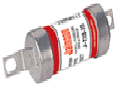
  • The typical fuse consists of an element which is surrounded by filler and enclosed by the fuse body. The element is welded or soldered to the fuse contacts (blades or ferrules).
  • The element is a calibrated conductor. Its configuration, mass and the materials employed are selected to achieve the desired electrical and thermal characteristics.
  • The element provides the current path through the fuse. It generates heat at a rate dependent on its resistance and the load current.
  • The heat generated by the element is absorbed by the filler and passed through the fuse body to the surrounding air. The filler material, such as quartz sand, provides effective heat transfer and allows for the small element cross-section typical in modern fuses.
  • The effective heat transfer allows the fuse to carry harmless overloads .The small element cross section melts quickly under short-circuit conditions. The filler also aids fuse performance by absorbing arc energy when the fuse clears an overload or short circuit.
  • When a sustained overload occurs, the element will generate heat at a faster rate than the heat can be passed to the filler. If the overload persists, the element will reach its melting point and open. Increasing the applied current will heat the element faster and cause the fuse to open sooner. Thus, fuses have an inverse time current characteristic: that is, the greater the over current, the less time required for the fuse to open the circuit.
  • This characteristic is desirable because it parallels the characteristics of conductors, motors, transformers, and other electrical apparatus. These components can carry low-level overloads for relatively long periods without damage. However, under high-current conditions, damage can occur quickly. Because of its inverse time current characteristic, a properly applied fuse can provide effective protection over a broad current range, from low-level overloads to high-level short circuits.

Commonly used terms for Fuse

  • I2t (Ampere Square second): A measure of the thermal energy associated with current flow.I2t is equal to (I RMS) 2 X t, where is the duration of current flow in seconds.A measure of thermal energy associated with current flow. It can be expressed as melting I2t, arcing I2t or the sum of them as Clearing I2t. Clearing I2t is the total I2t passed by a fuse as the fuse clears a fault, with t being equal to the time elapsed from the initiation of the fault to the instant the fault has been cleared. Melting I2t is the minimum I2t required to melt the fuse element
  • Interrupting Rating (Abbreviated I.R.)Same as breaking capacity or short circuit rating. The maximum current a fuse can safely interrupt at rated voltage. Some special purpose fuses may also have a “Minimum Interrupting Rating”. This defines the minimum current that a fuse can safely interrupt. Safe operation requires that the fuse remain intact. Interrupting ratings may vary with fuse design and range from 35 amperes AC for some 250V metric size (5 x 20mm) fuses up to 200,000 amperes AC for the 600V industrial fuses (for example, ATDR series).
  • Clearing I2t: The total I2t passed by a fuse as the fuse clears a fault, with being equal to the time elapsed from the initiation of the fault to the instant the fault has been cleared.
  • Melting I2t: The minimum I2t required melting the fuse element.
  • Ampere Rating: The continuous current carrying capability of a fuse under defined laboratory conditions. The ampere rating is marked on each fuse.
  • Available Fault Current: The maximum short-circuit current that can flow in an unprotected circuit.
  • Coordination: The use of over current protective devices that will isolate only that portion of an electrical system that has been overloaded or faulted.
  • Current limiting Range: currents a fuse will clear in less than ½ cycles, thus limiting the actual magnitude of current flow.
  • Element: A calibrated conductor inside a fuse that melts when subjected to excessive current. The element is enclosed by the fuse body and may be surrounded by an arc quenching medium such as silica sand. The element is sometimes referred to as a link.
  • Fast acting Fuse: This is a fuse with no intentional time-delay designed into the overload range. It is sometimes referred to as a “single-element fuse” or “non-delay fuse.”
  • Fault Current: Short-circuit current that flows partially or entirely outside the intended normal load current path of a circuit component. Values may be from hundreds to many thousands of amperes.
  1. Ferrule: copper mounting terminals of fuses with amp ratings up to 60 amperes. The cylindrical terminals at each end of a fuse fit into fuse clips.
  • Current limiting Fuse: A fuse that meets the following three conditions:
  1. 1. interrupts all available over currents within its interrupt rating.
  1. 2. Within its current limiting range, limits the clearing time at rated voltage to an interval equal to, or less than, the first major or symmetrical current loop duration.
  1. 3. Limits peak let-through current to a value less than the available peak current. The maximum level of fault current that the fuse has been tested to safely interrupt.
  • Arcing timeThe amount of time from the instant the fuse link has melted until the over current is interrupted, or cleared.
  • Clearing time The total time between the beginning of the over current and the final opening of the circuit at rated voltage by an over current protective device. Clearing time is the total of the melting time and the arcing time.
  • Fast acting fuse A fuse which opens on overload and short circuits very quickly. This type of fuse is not designed to withstand temporary overload currents associated with some electrical loads. UL listed or recognized fast acting fuses would typically open within 5 seconds maximum when subjected to 200% to 250% of its rated current.IEC has two categories of fast acting fuses:
  1. F= quick acting, opens 10x rated current within 0.001 seconds to 0.01 seconds
  1. FF = very quick acting, opens 10x rated current in less than 0.001 seconds
  • Overload Can be classified as an over current which exceeds the normal full load current of a circuit by 2 to 5 times its magnitude and stays within the normal current path.
  • Resistive load An electrical load which is characterized by not drawing any significant inrush current. When a resistive load is energized, the current rises instantly to its steady state value, without first rising to a higher value.
  •  RMS Current The R.M.S. (root mean square) value of any periodic current is equal to the value of the direct current which,flowing through a resistance, produces the same heating effect in the resistance as the periodic current does.
  • Short circuit An over current that leaves the normal current path and greatly exceeds the normal full load current of the circuit by a factor of tens, hundreds, or thousands times.
  • Time delay fuse A fuse with a built-in time delay that allows temporary and harmless inrush currents to pass without operating, but is so designed to open on sustained overloads and short circuits. UL listed or recognized time delay fuses typically open in 2 minutes maximum when subjected to 200% to 250% of rated current. IEC has two categories of time delay fuses:
  1. T= time lag, opens 10x rated current within 0.01 seconds to 0.1 seconds
  1. TT = long time lag, opens 10x rated current within 0.1 seconds to 1 second
  •  Voltage rating A maximum open circuit voltage in which a fuse can be used, yet safely interrupt an over current. Exceeding the Voltage rating of a fuse impairs its ability to clear an overload or short circuit safely.
  • Over current A condition which exists in an electrical circuit when the normal load current is exceeded. Over currents take on two separate characteristics-overloads and short circuits.
  • Threshold Current: The magnitude of symmetrical RMS available current at the threshold of the current-limiting range, where the fuse becomes current-limiting when tested to the industry standard.
  •  Threshold ratio: A threshold ratio is a relationship of threshold current to a fuse’s continuous current rating.

             Threshold Ratio = Fuse Threshold Current / Fuse Continuous Current.

Maximum threshold ratio for various types of fuses:

Fuse Class Ratio
CLASS RK5 65
CLASS RK1 30
CLASS J 30
CLASS CC 30
CLASS L 30 (601-1200 Amps)
CLASS L 35(1201-2000 Amps)
CLASS L 40 (2001-4000 Amps)
  • A current limiting fuse may be current limiting or may not be current limiting. The current limiting characteristic depends on the threshold ratio and available fault current.
  • Let’s consider an example of 1500 kVA radial service feeding a fusible switchboard with 2000 amps class L fuses. As per ANSI C 57 [3] standard, a typical impedance value for this size of a transformer is 5.75%; this value is a key factor in calculating the short circuit current.
  • All utility’s network provides a specific fault current at a specific location which depends on various factors, e.g.; cable lengths, cable size, X/R ratio and etc. If we ignore this limitation and assume that there is an unlimited fault current available from a utility, then let’s calculate short circuit current from a 1500 kVA transformer at 480 volts
  • The formula to calculate short circuit current (Isc)
  • ISC = (KVA X 10,000) / (1.732 X VOLT X %Z).
  • ISC = 1500 X 10,000 / 1.732 X 480 X 5.75
  • ISC = 31378.65 Amp.

Type of Fuse:

  •  A fuse unit essentially consists of a metal fuse element or link, a set of contacts between which it is fixed and a body to support and isolate them. Many types of fuses also have some means for extinguishing the arc which appears when the fuse element melts. In general, there are two categories of fuses.
  1. Low voltage fuses.
  2.  High voltage fuses.
  • Usually isolating switches are provided in series with fuses where it is necessary to permit fuses to be replaced or rewired with safety.
  •  In absence of such isolation means, the fuses must be so shielded as to protect the user against accidental contact with the live metal when the fuse is being inserted or removed.

LOW VOLTAGE FUSES

  • Low voltage fuses can be further divided into two classes namely
  1. Semi-enclosed or Rewire able type.
  2. Totally enclosed or Cartridge type.

(1) Re Wire able Fuse:

  • The most commonly used fuse in ‘house wiring’ and small current circuit is the semi-enclosed or rewire able fuse. (also sometime known as KIT-KAT type fuse). It consist of a porcelain base carrying the fixed contacts to which the incoming and outgoing live or phase wires are connected and a porcelain fuse carrier holding the fuse element, consisting of one or more strands of fuse wire, stretched between its terminals.

  •  The fuse carrier is a separate part and can be taken out or inserted in the base without risk, even without opening the main switch. If fuse holder or carrier gets damaged during use, it may be replaced without replacing the complete unit.
  • The fuse wire may be of lead, tinned copper, aluminum or an alloy of tin lead.
  • The actual fusing current will be about twice the rated current. When two or more fuse wire are used, the wires should be kept apart and a de rating factor of 0.7 to 0.8 should be employed to arrive at the total fuse rating.
  • The specification for re wire able fuses are covered by IS: 2086-1963. Standard ratings are 6, 16, 32, 63, and 100A.
  • A fuse wire of any rating not exceeding the rating of the fuse may be used in it that is a 80 A fuse wire can be used in a 100 A fuse, but not in the 63 A fuse. On occurrence of a fault, the fuse element blows off and the circuit is interrupted. The fuse carrier is pulled out, the blown out fuse element is replaced by new one and the supply can is resorted by re-inserting the fuse carrier in the base.
  • Though such fuses have the advantage of easy removal or replacement without any danger of coming into the contact with a lie part and negligible replacement cost but suffers from following disadvantages:
  1. Unreliable Operations.
  2. Lack of Discrimination.
  3. Small time lag.
  4. Low rupturing capacity.
  5. No current limiting feature.
  6. Slow speed of operations.

(2) Totally Enclosed Or Cartridges Type Fuse:

  •  The fuse element is enclosed in a totally enclosed container and is provided with metal contacts on both sides. These fuses are further classified as
  1. D-type.
  2. Link type.
  • Link type cartridges are again of two type’s viz. Knife blade or bolted type.

A) D- Type Cartridges Fuses

  • It is a non interchangeable fuse comprising s fuse base, adapter ring, cartridge and a fuse cap. The cartridge is pushed in the fuse cap and the cap is screwed on the fuse base. On complete screwing the cartridge tip touches the conductor and circuit between the two terminals is completed through the fuse link. The standard ratings are 6, 16, 32, and 63 amperes.

  • The breaking or rupturing capacity is of the order of 4k A for 2 and 4 ampere fuses the 16k A for 63 A fuses.
  • D-type cartridge fuse have none of the drawbacks of the re wire able fuses. Their operation is reliable. Coordination and discrimination to a reasonable extent and achieved with them.

B) Link type Cartridge or High Rupturing Capacity (HRC)

  • Where large numbers of concentrations of powers are concerned, as in the modern distribution system, it is essential that fuses should have a definite known breaking capacity and also this breaking capacity should have a high value. High rupturing capacity cartridge fuse, commonly called HRC cartridge fuses, have been designed and developed after intensive research by manufactures and supply engineers in his direction.

  • The usual fusing factor for the link fuses is 1.45. the fuses for special applications may have as low as a fusing factor as 1.2.
  • The specification for medium voltage HRC link fuses are covered under IS: 2202-1962.

        (A) Knife Blade Type HRC Fuse:


  • It can be replaced on a live circuit at no load with the help of a special insulated fuse puller.

       (B) Bolted Type HRC Link Fuse:


  • it has two conducting plates on either ends. These are bolted on the plates of the fuse base. Such a fuse needs an additional switch so that the fuse can be taken out without getting a shock.
  • Preferred ratings of HRC fuses are 2, 4, 6, 10, 16, 25, 30, 50, 63, 80, 100, 125, 160, 200, 250, 320, 400, 500, 630,800, 1000 and 1,250 amperes.

 Fuse Selection Guide

  • The fuse must carry the normal load current of the circuit without nuisance openings. However, when an over current occurs the fuse must interrupt the over current, limit the energy let-through, and withstand the voltage across the fuse during arcing. To properly select a fuse the followings must be considered:
  • Normal operating current (The current rating of a fuse is typically de rated 25% for operation at 25C to avoid nuisance blowing. For example, a fuse with a current rating of 10A is not usually recommended for operation at more than 7.5A in a 25C ambient.)
  • Overload current and time interval in which the fuse must open.
  • Application voltage (AC or DC Voltage).
  • Inrush currents, surge currents, pulses, start-up currents characteristics.
  • Ambient temperature.
  • Applicable standards agency required, such as UL, CSA, and VDE.
  • Considerations: Reduce installation cost, ease of removal, mounting type/form factor, etc

Recommended UL Current Limiting Fuse Classes:

TIME DELAY FUSE TYPE

Class Voltage Current
Class-L (LCL) 600V AC 601 – 6000A
Class RK1 (LENRK) 250V AC 0.6 -600A
Class RK1 (LESRK) 600V AC 0.5 -600A
Class RK5 (ECNR) 250V AC 0.1 -600A
Class RK5 (ECSR) 600V AC 0.1 -600A
Class J (JDL) 600V AC 1 -600A
Class CC (HCTR) 600V AC 0.25 -10A
     

FAST ACTING TYPE FUSE(Non/time-delay)

Class Voltage Current
Class-T (TJN) 300V AC 1 – 800A
Class-T (TJS) 600V AC 1 – 800A
Class-L (LCU) 600V AC 601– 6000A
Class-RK1(NCLR) 250V AC 1 – 600A
Class-RK1(SCLR) 600V AC 1 – 600A
Class J (JFL) 600V AC 1 -600A
Class CC (HCLR) 600V AC 0.1 -30A
     

 Fuse Class:

(1) Class L, fuses 

  • They provide a minimum time delay of 4 seconds at 500% of their rated current to handle harmless inrush currents, plus they are 20% more current limiting than any other Class L fuse.
  • That means optimal over current protection for service entrances, large motors, feeders and other circuits.
  • Range from 601 to 6000 amperes, 600V AC, 300kA
  • I.R., and an exclusive 500V DC, 100kA I.R., through 3000A.

Features

  • Fastest operation under short circuit conditions
  • Most current limiting for lowest peak let-thru current
  • Replaces all older Class L fuses
  • Pure silver links for long fuse life
  • AC and DC ratings
  • High-grade silica filler for fast arc quenching

Applications

  • Mains and feeders
  • Large motors
  • Lighting, heating and general loads
  • Power circuit breaker backup
  • UPS DC links, battery disconnects and other DC applications

Application notes

  • Mains and feeders — Can size at 100% of expected full load, unless equipment manufacturers specify
  • Motor starters — Consult your motor control manufacturer’s recommendations.
  • Lighting, heating and general loads — Can size at 100% to 125%, depending on load make-up.
  • Transformers — Due to the high inrush currents that can be experienced with transformers, size fuse to carry 12 times transformer full load for 0.1 second and 25 times full load for 0.01 second.

 (2) Class J, fuses 

  • The most current-limiting UL-class fuse, provide optimal performance, prevent interchangeability with old fuses, and save valuable panel space. So you can use smaller, more economical fuse blocks and IEC contactors to provide superior protection for dedicated or combined motor, lighting, heating and transformer loads.
  • Plus their time delay characteristic allows for use in a wide range of applications.
  •  Rated from 1 to 600 amperes, 600V AC, 300kA I.R., and 500V DC, 100kA I.R., listed to UL 248-8, they’re the right fuses for any new installation.

Features

  • Most current-limiting UL-class fuses
  • Timesaving Smart Spot™ indicator
  • Unique dimensions prevent misapplications
  • Optional mechanical indicator available on 70A to 600A AJT fuses

Applications

  • Motor circuits
  • Mains and feeders
  • Branch circuits
  • Lighting, heating and general loads
  • Transformers and control panels
  • Circuit breaker backup
  • Bus duct
  • Load centers

Application notes

  • Mains and feeders: Can size at 125% of load for NEC and CEC code compliance.
  • Motor starters: For typical starting duty and optimal coordination, fuse rating should not exceed 150% of motor FLA. Where “no-damage” tests have been conducted, follow the control gear manufacturer’s fuse ampere rating recommendations.
  • Lighting, heating and general loads: Can size at 125% of combined load for NEC and CEC code compliance.
  • Transformers: Due to the high inrush currents that can be experienced with transformers, size fuse to carry 12 times transformer full load for 0.1 second and 25 times full load for 0.01 second.

 (3) Class RK1 fuses:

  • Significantly more current limiting than Class RK5, K and H fuses, upgrading your existing feeder and branch circuits to arc flash category “0”. They also offer plenty of application flexibility, with ratings from 1/10A to 600A (250V or 600V), 300kA I.R.

Features

  • Highly current limiting to achieve HRC “0”
  • Timesaving Smart Spot™ indicator
  • Brass end caps (blade style) for cooler operation and superior performance
  • Rejection-style design

Applications

  • Motors
  • Safety switches
  • Transformers
  • Branch circuit protection
  • Disconnects
  • Control panels
  • General-purpose circuits

Application notes

  • Mains and feeders: Can size at 125% of load for NEC and CEC code compliance.
  • Motor starters: For typical starting duty and optimal coordination, fuse rating should not exceed 150% of motor FLA. Where “no damage” tests have been conducted, follows the control gear manufacturer’s fuse ampere rating recommendations.
  • Lighting, heating and general loads: Can size at 125% of combined load for NEC and CEC code compliance.
  • Transformers :Due to the high inrush currents that can be experienced with transformers, size fuse to carry 12 times transformer full load for 0.1 second and 25 times full load for 0.01 second.

(4) Class CC, fuses 

  • Choose our highly current-limiting fuses when you need maximum fault protection for sensitive branch circuit components and small motors. They deliver the best time delay characteristics and exceptional cycling ability for frequent motor starts and stops without nuisance opening. They’re available in 1/4A to 30A, 600VAC, 200kA I.R.

Features

  • Highly current limiting
  • Best time-delay characteristics in a Class CC fuse
  • Exceptional cycling ability for frequent motor stops and starts
  • Rejection-style design

Applications

  • Small motors
  • Contactors
  • Branch circuit protection

Application notes

  • Motor starters: for typical starting duty. Where “no damage” tests have been conducted, follows the control gear manufacturer’s fuse ampere rating recommendations.
  • Lighting, heating and general loads: Can size at 125% of combined load for NEC and CEC code compliance.

(5) Class CC, fuses 

  • Class CC fuses provides the time delay needed to handle the high inrush currents of control transformers, solenoids, and similar inductive loads.
  • They’re available in 1/10A to 30A, 600V AC, 200kA I.R.

Features

  • Highly current limiting
  • Rejection-style design
  • Special time-delay characteristics for transformer loads

Applications

  • Control transformers
  • Solenoids
  • Inductive loads
  • Branch circuit protection

Application notes

  • Control transformers, solenoids and similar inductive loads: For control transformers 600V AC or less with ratings up to 2000VA.fuses are designed to handle 40 times the transformer’s primary full load amperes for 0.01 second.
  • Lighting, heating and general loads: Can size at 125% of combined load for NEC and CEC code compliance.

 (6) Class RK5, fuses:

  •  Voltage / Ampere: 250V (1A to 200Amp), 600V (3A to 200A)

Description:

  • The time delay characteristics of these fuses typically allows them to be sized closer to the running ampacity of inductive loads to reduce cost and improve over current protection

Application:

  • Use in AC power distribution system mains, feeders, and branch circuits.
  • Recommended for high inrush inductive loads, like motors and transformers, and non inductive loads like lighting, and heating loads.

 (7) Class Midget fuses (600V, 0.5To 50A):

 Description:

  • Provides supplemental protection to end-use equipment with a 100KA interruption rating, 600VAC. Fast acting design responds quickly to both overloads and short-circuit protection.

Application:

  • Recommended for control circuits, street lighting, HID lighting, and electronic equipment protection

 (8) Class Midget fuses (250V, 0.5To 50A)

 Description:

  • Provides supplemental protection to end-use equipment with a 10,000A interruption rating, economical laminated paper tube

Application:

  • Recommended to use as supplemental protection for non inductive control loads and lighting circuits

 (9) Class Midget fuses (500V, 0.25To 30A)

 Description:

  • Provides supplemental protection to high inrush loads. has a 10,000A interruption rating, 500VAC. Fiber tube construction.

Application:

  • Recommended to use as supplemental protection for inductive control loads such as transformers and solenoids.

(10) Class Midget fuses (250V, 0.5To 30A)

 Description:

  • Provides supplemental protection to high inrush loads. has a 10,000A interruption rating, fiber tube construction. Dual element allows harmless inductive surges to pass without opening

Application:

  • Recommended to use as supplemental protection for inductive control loads such as transformers and solenoids

(11) Class 1 1/4″ x 1/4″ Ceramic (250,125V, 0.5To 30A)

 Description:

  • Fast acting 1/4″ x 1-1/4″ ceramic tube construction.

Application:

  • Recommended to use as supplemental protection for inductive control loads such as transformers and solenoids.

(12) Class 1 1/4″ x 1/4″ Glass (250,32V, 0.5To 30A)

 Description:

  • Fast acting 1/4″ x 1-1/4″ glass tube construction.

Application:

  • Recommended as supplemental protection for electronic applications.

 (13) Class 5mmx20mm Glass (250,125V, 0.063To 15A)

 Description:

  • Fast acting 5mmx20mm glass tube construction.

Application:

  • Recommended as supplemental protection for electronic applications.

(14)  Class 5mmx20mm Glass (250,125V, 0.5To 10A)

 Description:

  • Medium Time Delay 5mm x 20mm glass tube construction.

Application:

  • Recommended as supplemental protection for electronic applications.

 (15) Class 1 1/4″ x 1/4″ Ceramic (250, 0.5To 20A)

 Description:

  • Time Delay 1/4″ x 1-1/4″ ceramic tube construction.

Application:

  • Recommended as supplemental protection for electronic applications.

 (16) Class 1 1/4″ x 1/4″ Glass (250,32V, 0.0625To 20A)

 Description:

  • Time Delay 1/4″ x 1-1/4″ glass tube construction.

Application:

  • Recommended as supplemental protection for electronic applications

 (17) Class 5mmx20mm Glass (250, 0.5To 10A)

 Description:

  • Fast acting 5mm x 20mm glass tube construction

Application:

  • Recommended as supplemental protection for electronic applications.

 (18) Class 5mmx20mm Glass (250, 0.25To 6.3A)

 Description:

  • Time Delay 5mm x 20mm glass tube construction.

Application:

  • Recommended as supplemental protection for electronic applications.

 Selection of Fuse for Main and Branch Circuits:

 1 Main Service Conductor Cable Limiters (NEC 240,230.82):

  • Select by cable size and mounting terminal configurations required.

2 Main Service Circuit Fuses–Mixed Loads:

  • Size fuses same as item 6.

3 Transformer Circuit Fuses (NEC 450.3b, 240.3, 240.21, 430.72 (c) as required):*

  • (a) PRIMARY FUSES: Size fuses not over 125%. As exceptions exist, refer to the appropriate NEC® paragraphs.
  • Recommended fusesL Time Delay- Class RK1, Class RK5, Class L, Class J)
  • (b) SECONDARY FUSES (Sum of following): 125% of the continuous load + 100% of non-continuous load. Fuse size not to exceed 125% of transformer secondary rated amps.
  • RECOMMENDED FUSES: Class RK1, Class RK5, ClassJ LENRK, ECNR, NCLR, JDL or LCU.

4 Branch Circuit Fuse Size, No Motor Load (NEC 240.3, 210.20):

  • 100% of non-continuous load, +125% of continuous load.
  • *Do not exceed conductor ampacity. Recommended fuses: LENRK, ECNR, NCLR, JDL, LCU, or LCL.

5 Branch Circuit Fuse Size, No Motor Load (NEC240.3, 210.20):

  • 100% of non-continuous load, + 125% of continuous load. Fuse may be sized 100% when used with a continuous rated switch. Recommended fuses same as 4.

6 Feeder Circuit Fuse Size, Mixed Load (NEC 240.3, 430.63, 430.24):

  • (a) 100% of non-continuous, non-motor load + 125% of continuous, non-motor load.
  • (b) Determine non-continuous motor load (NEC430.22 (e).1.) Add to “a” above.
  • (c) Determine A/C or refrigeration load. (NEC 440.6). Add to “a” above.
  • (d) Feeder protective device shall have a rating or setting not greater than the rating of the largest branch device and sum of the FLCs of the other motors.(NEC 430.62)
  • (e) Recommended fuses: LENRK/LESRK, JDL, ECNR/ECSR, LCU, LCL.

7 Feeder Circuit Fuse Size, 100% Motor Load (NEC 240.3, 430.62 (a).

  • (a)Determine non-continuous motor load (NEC430.22 (e).
  • (b)Determine load of A/C or refrigeration equipment (NEC 440.6). Add to “a” above.
  • (c) Feeder protective device shall have a rating or setting not greater than the rating of the largest branch device and sum of the FLCs of the other motors.(NEC 430.62)
  • (d) Recommended fuses: LENRK/LESRK, JDL, ECNR/ECSR or LCL.

8 Branch Circuit Fuse Size, Individual Motor Load, With Fuse Overload Protection (No Starter Overload Relays): (NEC 430.32, 430.36):

  • (a) Motors with 1.15 Service Factor or temperature rise not over 40 Degrees C., size fuses at not more than 125% of the motor nameplate current rating.
  • (b) For all other A-C motors, size fuses at not more than 115 %.
  • (c) Best protection is obtained by measuring motor running current and sizing fuses at 125% of measured current for normal motor operation. Reference to “Average Time/Current Curves” is recommended.
  • (d) Recommended Fuses: LENRK/LESRK, JDL, or ECNR/ECSR

.9 Branch Circuit Fuse Size, Individual Motor Load, With Starter Overload Relays: (NEC 430.32, 430.52):

  • (a) For “back-up” NEC® overload, ground fault and short circuit protection size the fuses the same as (8 a, b) above, or the next standard size larger.
  • (b) The fuse sizes in a) above may be increased as allowed by NEC® references. Generally, dual element fuses should not exceed 175% of motor nameplate F.L.A. and non-UL defined time-delay fuses not more than 300 %.
  • (c) Recommended fuses: LENRK/LESRK, JDL, ECNR/ ECSR or LCL.

10 Fuse Sizing for Individual Large Motors With F.L.A. Above 480 Amps or Otherwise Require Class L Fuses – (NEC 430.52):

  • Application Tips:
  • Size fuses as closely as practical to the ampacity of the protected circuit components without the probability of unnecessary fuse opening from harmless, transient current surges. This usually requires a choice between time-delay and non-time-delay fuses.
  • Use Class R fuse clips with Class R fuses to prevent installation of fuses with less interrupting rating or current limitation. Class H fuse reducers cannot be used with Class R fuse clips.
  •  When a conductor is oversized to prevent excess voltage drop, size the fuses for the ampacity of protected circuit components instead of over sizing fuses for the larger conductor.

  Selection of Fuse for Motor Protection:

  •  Group installation is an approach to building multi-motor control systems in accordance with Section 430-53 of the National Electrical Code. The selection of components used in group installations is a simple process which consists of several steps.
  • First is the selection of the appropriate fuse as Branch Circuit Protective Device (BCPD).
  • Second is the selection of the appropriate motor starter and protector.
  • Third, the selected MMP must be checked for UL listing with the selected BCPD and the available short circuit current at the application location.

1. Fused disconnect

  • Calculate maximum fuse size according to NEC 430-53 (c).
  • Imax (fuse size) =175% x FLC (full load current for largest motor) + the sum of FLC (full load current for largest motor) + the sum of FLC values for other motors on that branch using NEC Table 430-150 on the right.
  • Select fuse from NEC Table 240-6 below. Where Imax falls between two fuse ampere ratings NEC 430-53 (c) permits going to the next high ampere rating.

2. Motor protector selection

  • Select the proper MMP catalog number for each motor load from the based on the actual motor full load current (FLA) using the “Thermal setting range” column for reference.

3. MMP Interruption ratings

  • Using the interruption ratings table on the next page, identify the system application voltage and interrupting capacity for the type of fuse selected in step1 above.
  • NEC 240-6 Standard fuse amperes 15, 20, 25, 30, 40, 45, 50, 60, 70, 80, 90, 110, 125, 150, 175, 200, 225, 250, 300, 350, 400, 450, 500, 600, 700, 800, 1000, 1200, 1600
  • Examples: Select components for protecting the following 3-phase, 460VAC, squirrel cage induction motors. The nameplate data are: 1/2 HP, 1.0 FLA; 3 HP, 4.8 FLA; 5 HP, 7.6 FLA; 7.5 HP, 11 FLA; 10 HP, 14 FLA.
  • Example: using fused disconnect
  • Imax = 175% x 14 + (11 + 7.6 + 4.8 + 1) = 48.9A
  • Fuse rating using Table NEC 240-6 = 50A
  • Minimum disconnect size = 115% x Total FLA
  • NEC 430-150 table = 115% x (14+ 11 + 7.6 + 4.8 + 1) = 44.16
  • Disconnect for 50A fuses is ok
  • NEC Table 430-150 full load current, 3ph AC motor
H.P Induction Type Motor (Squirrel Cage, Wound Type)
230V Amp 460V Amp 575V Amp
½ 2 1 0.8
¾ 2.8 1.4 1.1
1 3.6 1.8 1.4
1.5 5.2 2.6 2.1
2 6.8 3.4 2.7
3 9.6 4.8 3.9
5 15.2 7.6 6.1
7.5 22 11 9
10 28 14 11
15 42 21 17
20 54 27 22
25 68 34 27

Fuse Ratings

  • Fuses with an A-C voltage rating may be applied at system voltages below the fuse voltage rating, but not at voltages above the fuse voltage rating.
  • The other A-C fuse ratings remain the same at applied voltages below the fuse voltage rating.
  • A-C rated fuses should not be applied in D-C voltage circuits unless D-C application ratings are provided by the fuse manufacturer.
  • Except for some special purpose fuses, D-C ratings are not usually shown on fuse labels.
  • The operating frequency (Hertz) will affect fuse characteristics in various ways.
  • Time/Current Curves will not shift and fuse ratings will not change from 1-100 Hertz in normal applications. If ferrous hardware is used to mount the fuses, eddy current heating could alter the ratings.
  • Above 100 Hertz, “skin effect” could alter the fuses’ rating characteristics. This effect must be analyzed on an individual application basis.
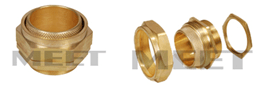
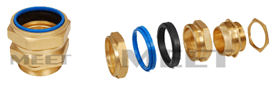
Fuse

What is Fuses

  • A fuse is a device that protects a circuit from an over current condition only.  It has a fusible link directly heated and destroyed by the current passing through it.    A  fuse  contains  a  current- carrying element sized so that the heat generated by the flow of normal current through it does not  cause  it  to  melt  the  element;  however,  when  an  over current  or  short-circuit  current  flows through the fuse, the fusible link will melt and open the circuit.
  • A device that protects a circuit by fusing opens its current-responsive element when an over-current passes through it. An over-current is either due to an overload or a short circuit condition.
  • The Underwriter Laboratories (UL) classifies fuses by letters e.g. class CC, T, K, G, J, L, R, and so forth. The class letter may designate interrupting rating, physical dimensions, and degree of current limitation.
  • As per NEC and ANSI/IEEE standard 242 [2] – A current limiting fuse is a fuse that will interrupt all available currents above its threshold current and below its maximum interrupting rating, limit the clearing time at rated voltage to an interval equal to or less than the first major or symmetrical loop duration, and limit peak let-through current to a value less than the peak that would be possible with the fuse replaced by a solid conductor of the same impedance.

Fuse Construction:

  • The typical fuse consists of an element which is surrounded by filler and enclosed by the fuse body. The element is welded or soldered to the fuse contacts (blades or ferrules).
  • The element is a calibrated conductor. Its configuration, mass and the materials employed are selected to achieve the desired electrical and thermal characteristics.
  • The element provides the current path through the fuse. It generates heat at a rate dependent on its resistance and the load current.
  • The heat generated by the element is absorbed by the filler and passed through the fuse body to the surrounding air. The filler material, such as quartz sand, provides effective heat transfer and allows for the small element cross-section typical in modern fuses.
  • The effective heat transfer allows the fuse to carry harmless overloads .The small element cross section melts quickly under short-circuit conditions. The filler also aids fuse performance by absorbing arc energy when the fuse clears an overload or short circuit.
  • When a sustained overload occurs, the element will generate heat at a faster rate than the heat can be passed to the filler. If the overload persists, the element will reach its melting point and open. Increasing the applied current will heat the element faster and cause the fuse to open sooner. Thus, fuses have an inverse time current characteristic: that is, the greater the over current, the less time required for the fuse to open the circuit.
  • This characteristic is desirable because it parallels the characteristics of conductors, motors, transformers, and other electrical apparatus. These components can carry low-level overloads for relatively long periods without damage. However, under high-current conditions, damage can occur quickly. Because of its inverse time current characteristic, a properly applied fuse can provide effective protection over a broad current range, from low-level overloads to high-level short circuits.

Commonly used terms for Fuse

  • I2t (Ampere Square second): A measure of the thermal energy associated with current flow.I2t is equal to (I RMS) 2 X t, where is the duration of current flow in seconds.A measure of thermal energy associated with current flow. It can be expressed as melting I2t, arcing I2t or the sum of them as Clearing I2t. Clearing I2t is the total I2t passed by a fuse as the fuse clears a fault, with t being equal to the time elapsed from the initiation of the fault to the instant the fault has been cleared. Melting I2t is the minimum I2t required to melt the fuse element
  • Interrupting Rating (Abbreviated I.R.)Same as breaking capacity or short circuit rating. The maximum current a fuse can safely interrupt at rated voltage. Some special purpose fuses may also have a “Minimum Interrupting Rating”. This defines the minimum current that a fuse can safely interrupt. Safe operation requires that the fuse remain intact. Interrupting ratings may vary with fuse design and range from 35 amperes AC for some 250V metric size (5 x 20mm) fuses up to 200,000 amperes AC for the 600V industrial fuses (for example, ATDR series).
  • Clearing I2t: The total I2t passed by a fuse as the fuse clears a fault, with being equal to the time elapsed from the initiation of the fault to the instant the fault has been cleared.
  • Melting I2t: The minimum I2t required melting the fuse element.
  • Ampere Rating: The continuous current carrying capability of a fuse under defined laboratory conditions. The ampere rating is marked on each fuse.
  • Available Fault Current: The maximum short-circuit current that can flow in an unprotected circuit.
  • Coordination: The use of over current protective devices that will isolate only that portion of an electrical system that has been overloaded or faulted.
  • Current limiting Range: currents a fuse will clear in less than ½ cycles, thus limiting the actual magnitude of current flow.
  • Element: A calibrated conductor inside a fuse that melts when subjected to excessive current. The element is enclosed by the fuse body and may be surrounded by an arc quenching medium such as silica sand. The element is sometimes referred to as a link.
  • Fast acting Fuse: This is a fuse with no intentional time-delay designed into the overload range. It is sometimes referred to as a “single-element fuse” or “non-delay fuse.”
  • Fault Current: Short-circuit current that flows partially or entirely outside the intended normal load current path of a circuit component. Values may be from hundreds to many thousands of amperes.
  1. Ferrule: copper mounting terminals of fuses with amp ratings up to 60 amperes. The cylindrical terminals at each end of a fuse fit into fuse clips.
  • Current limiting Fuse: A fuse that meets the following three conditions:
  1. 1. interrupts all available over currents within its interrupt rating.
  1. 2. Within its current limiting range, limits the clearing time at rated voltage to an interval equal to, or less than, the first major or symmetrical current loop duration.
  1. 3. Limits peak let-through current to a value less than the available peak current. The maximum level of fault current that the fuse has been tested to safely interrupt.
  • Arcing timeThe amount of time from the instant the fuse link has melted until the over current is interrupted, or cleared.
  • Clearing time The total time between the beginning of the over current and the final opening of the circuit at rated voltage by an over current protective device. Clearing time is the total of the melting time and the arcing time.
  • Fast acting fuse A fuse which opens on overload and short circuits very quickly. This type of fuse is not designed to withstand temporary overload currents associated with some electrical loads. UL listed or recognized fast acting fuses would typically open within 5 seconds maximum when subjected to 200% to 250% of its rated current.IEC has two categories of fast acting fuses:
  1. F= quick acting, opens 10x rated current within 0.001 seconds to 0.01 seconds
  1. FF = very quick acting, opens 10x rated current in less than 0.001 seconds
  • Overload Can be classified as an over current which exceeds the normal full load current of a circuit by 2 to 5 times its magnitude and stays within the normal current path.
  • Resistive load An electrical load which is characterized by not drawing any significant inrush current. When a resistive load is energized, the current rises instantly to its steady state value, without first rising to a higher value.
  •  RMS Current The R.M.S. (root mean square) value of any periodic current is equal to the value of the direct current which,flowing through a resistance, produces the same heating effect in the resistance as the periodic current does.
  • Short circuit An over current that leaves the normal current path and greatly exceeds the normal full load current of the circuit by a factor of tens, hundreds, or thousands times.
  • Time delay fuse A fuse with a built-in time delay that allows temporary and harmless inrush currents to pass without operating, but is so designed to open on sustained overloads and short circuits. UL listed or recognized time delay fuses typically open in 2 minutes maximum when subjected to 200% to 250% of rated current. IEC has two categories of time delay fuses:
  1. T= time lag, opens 10x rated current within 0.01 seconds to 0.1 seconds
  1. TT = long time lag, opens 10x rated current within 0.1 seconds to 1 second
  •  Voltage rating A maximum open circuit voltage in which a fuse can be used, yet safely interrupt an over current. Exceeding the Voltage rating of a fuse impairs its ability to clear an overload or short circuit safely.
  • Over current A condition which exists in an electrical circuit when the normal load current is exceeded. Over currents take on two separate characteristics-overloads and short circuits.
  • Threshold Current: The magnitude of symmetrical RMS available current at the threshold of the current-limiting range, where the fuse becomes current-limiting when tested to the industry standard.
  •  Threshold ratio: A threshold ratio is a relationship of threshold current to a fuse’s continuous current rating.

             Threshold Ratio = Fuse Threshold Current / Fuse Continuous Current.

Maximum threshold ratio for various types of fuses:

Fuse Class Ratio
CLASS RK5 65
CLASS RK1 30
CLASS J 30
CLASS CC 30
CLASS L 30 (601-1200 Amps)
CLASS L 35(1201-2000 Amps)
CLASS L 40 (2001-4000 Amps)
  • A current limiting fuse may be current limiting or may not be current limiting. The current limiting characteristic depends on the threshold ratio and available fault current.
  • Let’s consider an example of 1500 kVA radial service feeding a fusible switchboard with 2000 amps class L fuses. As per ANSI C 57 [3] standard, a typical impedance value for this size of a transformer is 5.75%; this value is a key factor in calculating the short circuit current.
  • All utility’s network provides a specific fault current at a specific location which depends on various factors, e.g.; cable lengths, cable size, X/R ratio and etc. If we ignore this limitation and assume that there is an unlimited fault current available from a utility, then let’s calculate short circuit current from a 1500 kVA transformer at 480 volts
  • The formula to calculate short circuit current (Isc)
  • ISC = (KVA X 10,000) / (1.732 X VOLT X %Z).
  • ISC = 1500 X 10,000 / 1.732 X 480 X 5.75
  • ISC = 31378.65 Amp.

Type of Fuse:

  •  A fuse unit essentially consists of a metal fuse element or link, a set of contacts between which it is fixed and a body to support and isolate them. Many types of fuses also have some means for extinguishing the arc which appears when the fuse element melts. In general, there are two categories of fuses.
  1. Low voltage fuses.
  2.  High voltage fuses.
  • Usually isolating switches are provided in series with fuses where it is necessary to permit fuses to be replaced or rewired with safety.
  •  In absence of such isolation means, the fuses must be so shielded as to protect the user against accidental contact with the live metal when the fuse is being inserted or removed.

LOW VOLTAGE FUSES

  • Low voltage fuses can be further divided into two classes namely
  1. Semi-enclosed or Rewire able type.
  2. Totally enclosed or Cartridge type.

(1) Re Wire able Fuse:

  • The most commonly used fuse in ‘house wiring’ and small current circuit is the semi-enclosed or rewire able fuse. (also sometime known as KIT-KAT type fuse). It consist of a porcelain base carrying the fixed contacts to which the incoming and outgoing live or phase wires are connected and a porcelain fuse carrier holding the fuse element, consisting of one or more strands of fuse wire, stretched between its terminals.

  •  The fuse carrier is a separate part and can be taken out or inserted in the base without risk, even without opening the main switch. If fuse holder or carrier gets damaged during use, it may be replaced without replacing the complete unit.
  • The fuse wire may be of lead, tinned copper, aluminum or an alloy of tin lead.
  • The actual fusing current will be about twice the rated current. When two or more fuse wire are used, the wires should be kept apart and a de rating factor of 0.7 to 0.8 should be employed to arrive at the total fuse rating.
  • The specification for re wire able fuses are covered by IS: 2086-1963. Standard ratings are 6, 16, 32, 63, and 100A.
  • A fuse wire of any rating not exceeding the rating of the fuse may be used in it that is a 80 A fuse wire can be used in a 100 A fuse, but not in the 63 A fuse. On occurrence of a fault, the fuse element blows off and the circuit is interrupted. The fuse carrier is pulled out, the blown out fuse element is replaced by new one and the supply can is resorted by re-inserting the fuse carrier in the base.
  • Though such fuses have the advantage of easy removal or replacement without any danger of coming into the contact with a lie part and negligible replacement cost but suffers from following disadvantages:
  1. Unreliable Operations.
  2. Lack of Discrimination.
  3. Small time lag.
  4. Low rupturing capacity.
  5. No current limiting feature.
  6. Slow speed of operations.

(2) Totally Enclosed Or Cartridges Type Fuse:

  •  The fuse element is enclosed in a totally enclosed container and is provided with metal contacts on both sides. These fuses are further classified as
  1. D-type.
  2. Link type.
  • Link type cartridges are again of two type’s viz. Knife blade or bolted type.

A) D- Type Cartridges Fuses

  • It is a non interchangeable fuse comprising s fuse base, adapter ring, cartridge and a fuse cap. The cartridge is pushed in the fuse cap and the cap is screwed on the fuse base. On complete screwing the cartridge tip touches the conductor and circuit between the two terminals is completed through the fuse link. The standard ratings are 6, 16, 32, and 63 amperes.

  • The breaking or rupturing capacity is of the order of 4k A for 2 and 4 ampere fuses the 16k A for 63 A fuses.
  • D-type cartridge fuse have none of the drawbacks of the re wire able fuses. Their operation is reliable. Coordination and discrimination to a reasonable extent and achieved with them.

B) Link type Cartridge or High Rupturing Capacity (HRC)

  • Where large numbers of concentrations of powers are concerned, as in the modern distribution system, it is essential that fuses should have a definite known breaking capacity and also this breaking capacity should have a high value. High rupturing capacity cartridge fuse, commonly called HRC cartridge fuses, have been designed and developed after intensive research by manufactures and supply engineers in his direction.

  • The usual fusing factor for the link fuses is 1.45. the fuses for special applications may have as low as a fusing factor as 1.2.
  • The specification for medium voltage HRC link fuses are covered under IS: 2202-1962.

        (A) Knife Blade Type HRC Fuse:


  • It can be replaced on a live circuit at no load with the help of a special insulated fuse puller.

       (B) Bolted Type HRC Link Fuse:


  • it has two conducting plates on either ends. These are bolted on the plates of the fuse base. Such a fuse needs an additional switch so that the fuse can be taken out without getting a shock.
  • Preferred ratings of HRC fuses are 2, 4, 6, 10, 16, 25, 30, 50, 63, 80, 100, 125, 160, 200, 250, 320, 400, 500, 630,800, 1000 and 1,250 amperes.

 Fuse Selection Guide

  • The fuse must carry the normal load current of the circuit without nuisance openings. However, when an over current occurs the fuse must interrupt the over current, limit the energy let-through, and withstand the voltage across the fuse during arcing. To properly select a fuse the followings must be considered:
  • Normal operating current (The current rating of a fuse is typically de rated 25% for operation at 25C to avoid nuisance blowing. For example, a fuse with a current rating of 10A is not usually recommended for operation at more than 7.5A in a 25C ambient.)
  • Overload current and time interval in which the fuse must open.
  • Application voltage (AC or DC Voltage).
  • Inrush currents, surge currents, pulses, start-up currents characteristics.
  • Ambient temperature.
  • Applicable standards agency required, such as UL, CSA, and VDE.
  • Considerations: Reduce installation cost, ease of removal, mounting type/form factor, etc

Recommended UL Current Limiting Fuse Classes:

TIME DELAY FUSE TYPE

Class Voltage Current
Class-L (LCL) 600V AC 601 – 6000A
Class RK1 (LENRK) 250V AC 0.6 -600A
Class RK1 (LESRK) 600V AC 0.5 -600A
Class RK5 (ECNR) 250V AC 0.1 -600A
Class RK5 (ECSR) 600V AC 0.1 -600A
Class J (JDL) 600V AC 1 -600A
Class CC (HCTR) 600V AC 0.25 -10A
     

FAST ACTING TYPE FUSE(Non/time-delay)

Class Voltage Current
Class-T (TJN) 300V AC 1 – 800A
Class-T (TJS) 600V AC 1 – 800A
Class-L (LCU) 600V AC 601– 6000A
Class-RK1(NCLR) 250V AC 1 – 600A
Class-RK1(SCLR) 600V AC 1 – 600A
Class J (JFL) 600V AC 1 -600A
Class CC (HCLR) 600V AC 0.1 -30A
     

 Fuse Class:

(1) Class L, fuses 

  • They provide a minimum time delay of 4 seconds at 500% of their rated current to handle harmless inrush currents, plus they are 20% more current limiting than any other Class L fuse.
  • That means optimal over current protection for service entrances, large motors, feeders and other circuits.
  • Range from 601 to 6000 amperes, 600V AC, 300kA
  • I.R., and an exclusive 500V DC, 100kA I.R., through 3000A.

Features

  • Fastest operation under short circuit conditions
  • Most current limiting for lowest peak let-thru current
  • Replaces all older Class L fuses
  • Pure silver links for long fuse life
  • AC and DC ratings
  • High-grade silica filler for fast arc quenching

Applications

  • Mains and feeders
  • Large motors
  • Lighting, heating and general loads
  • Power circuit breaker backup
  • UPS DC links, battery disconnects and other DC applications

Application notes

  • Mains and feeders — Can size at 100% of expected full load, unless equipment manufacturers specify
  • Motor starters — Consult your motor control manufacturer’s recommendations.
  • Lighting, heating and general loads — Can size at 100% to 125%, depending on load make-up.
  • Transformers — Due to the high inrush currents that can be experienced with transformers, size fuse to carry 12 times transformer full load for 0.1 second and 25 times full load for 0.01 second.

 (2) Class J, fuses 

  • The most current-limiting UL-class fuse, provide optimal performance, prevent interchangeability with old fuses, and save valuable panel space. So you can use smaller, more economical fuse blocks and IEC contactors to provide superior protection for dedicated or combined motor, lighting, heating and transformer loads.
  • Plus their time delay characteristic allows for use in a wide range of applications.
  •  Rated from 1 to 600 amperes, 600V AC, 300kA I.R., and 500V DC, 100kA I.R., listed to UL 248-8, they’re the right fuses for any new installation.

Features

  • Most current-limiting UL-class fuses
  • Timesaving Smart Spot™ indicator
  • Unique dimensions prevent misapplications
  • Optional mechanical indicator available on 70A to 600A AJT fuses

Applications

  • Motor circuits
  • Mains and feeders
  • Branch circuits
  • Lighting, heating and general loads
  • Transformers and control panels
  • Circuit breaker backup
  • Bus duct
  • Load centers

Application notes

  • Mains and feeders: Can size at 125% of load for NEC and CEC code compliance.
  • Motor starters: For typical starting duty and optimal coordination, fuse rating should not exceed 150% of motor FLA. Where “no-damage” tests have been conducted, follow the control gear manufacturer’s fuse ampere rating recommendations.
  • Lighting, heating and general loads: Can size at 125% of combined load for NEC and CEC code compliance.
  • Transformers: Due to the high inrush currents that can be experienced with transformers, size fuse to carry 12 times transformer full load for 0.1 second and 25 times full load for 0.01 second.

 (3) Class RK1 fuses:

  • Significantly more current limiting than Class RK5, K and H fuses, upgrading your existing feeder and branch circuits to arc flash category “0”. They also offer plenty of application flexibility, with ratings from 1/10A to 600A (250V or 600V), 300kA I.R.

Features

  • Highly current limiting to achieve HRC “0”
  • Timesaving Smart Spot™ indicator
  • Brass end caps (blade style) for cooler operation and superior performance
  • Rejection-style design

Applications

  • Motors
  • Safety switches
  • Transformers
  • Branch circuit protection
  • Disconnects
  • Control panels
  • General-purpose circuits

Application notes

  • Mains and feeders: Can size at 125% of load for NEC and CEC code compliance.
  • Motor starters: For typical starting duty and optimal coordination, fuse rating should not exceed 150% of motor FLA. Where “no damage” tests have been conducted, follows the control gear manufacturer’s fuse ampere rating recommendations.
  • Lighting, heating and general loads: Can size at 125% of combined load for NEC and CEC code compliance.
  • Transformers :Due to the high inrush currents that can be experienced with transformers, size fuse to carry 12 times transformer full load for 0.1 second and 25 times full load for 0.01 second.

(4) Class CC, fuses 

  • Choose our highly current-limiting fuses when you need maximum fault protection for sensitive branch circuit components and small motors. They deliver the best time delay characteristics and exceptional cycling ability for frequent motor starts and stops without nuisance opening. They’re available in 1/4A to 30A, 600VAC, 200kA I.R.

Features

  • Highly current limiting
  • Best time-delay characteristics in a Class CC fuse
  • Exceptional cycling ability for frequent motor stops and starts
  • Rejection-style design

Applications

  • Small motors
  • Contactors
  • Branch circuit protection

Application notes

  • Motor starters: for typical starting duty. Where “no damage” tests have been conducted, follows the control gear manufacturer’s fuse ampere rating recommendations.
  • Lighting, heating and general loads: Can size at 125% of combined load for NEC and CEC code compliance.

(5) Class CC, fuses 

  • Class CC fuses provides the time delay needed to handle the high inrush currents of control transformers, solenoids, and similar inductive loads.
  • They’re available in 1/10A to 30A, 600V AC, 200kA I.R.

Features

  • Highly current limiting
  • Rejection-style design
  • Special time-delay characteristics for transformer loads

Applications

  • Control transformers
  • Solenoids
  • Inductive loads
  • Branch circuit protection

Application notes

  • Control transformers, solenoids and similar inductive loads: For control transformers 600V AC or less with ratings up to 2000VA.fuses are designed to handle 40 times the transformer’s primary full load amperes for 0.01 second.
  • Lighting, heating and general loads: Can size at 125% of combined load for NEC and CEC code compliance.

 (6) Class RK5, fuses:

  •  Voltage / Ampere: 250V (1A to 200Amp), 600V (3A to 200A)

Description:

  • The time delay characteristics of these fuses typically allows them to be sized closer to the running ampacity of inductive loads to reduce cost and improve over current protection

Application:

  • Use in AC power distribution system mains, feeders, and branch circuits.
  • Recommended for high inrush inductive loads, like motors and transformers, and non inductive loads like lighting, and heating loads.

 (7) Class Midget fuses (600V, 0.5To 50A):

 Description:

  • Provides supplemental protection to end-use equipment with a 100KA interruption rating, 600VAC. Fast acting design responds quickly to both overloads and short-circuit protection.

Application:

  • Recommended for control circuits, street lighting, HID lighting, and electronic equipment protection

 (8) Class Midget fuses (250V, 0.5To 50A)

 Description:

  • Provides supplemental protection to end-use equipment with a 10,000A interruption rating, economical laminated paper tube

Application:

  • Recommended to use as supplemental protection for non inductive control loads and lighting circuits

 (9) Class Midget fuses (500V, 0.25To 30A)

 Description:

  • Provides supplemental protection to high inrush loads. has a 10,000A interruption rating, 500VAC. Fiber tube construction.

Application:

  • Recommended to use as supplemental protection for inductive control loads such as transformers and solenoids.

(10) Class Midget fuses (250V, 0.5To 30A)

 Description:

  • Provides supplemental protection to high inrush loads. has a 10,000A interruption rating, fiber tube construction. Dual element allows harmless inductive surges to pass without opening

Application:

  • Recommended to use as supplemental protection for inductive control loads such as transformers and solenoids

(11) Class 1 1/4″ x 1/4″ Ceramic (250,125V, 0.5To 30A)

 Description:

  • Fast acting 1/4″ x 1-1/4″ ceramic tube construction.

Application:

  • Recommended to use as supplemental protection for inductive control loads such as transformers and solenoids.

(12) Class 1 1/4″ x 1/4″ Glass (250,32V, 0.5To 30A)

 Description:

  • Fast acting 1/4″ x 1-1/4″ glass tube construction.

Application:

  • Recommended as supplemental protection for electronic applications.

 (13) Class 5mmx20mm Glass (250,125V, 0.063To 15A)

 Description:

  • Fast acting 5mmx20mm glass tube construction.

Application:

  • Recommended as supplemental protection for electronic applications.

(14)  Class 5mmx20mm Glass (250,125V, 0.5To 10A)

 Description:

  • Medium Time Delay 5mm x 20mm glass tube construction.

Application:

  • Recommended as supplemental protection for electronic applications.

 (15) Class 1 1/4″ x 1/4″ Ceramic (250, 0.5To 20A)

 Description:

  • Time Delay 1/4″ x 1-1/4″ ceramic tube construction.

Application:

  • Recommended as supplemental protection for electronic applications.

 (16) Class 1 1/4″ x 1/4″ Glass (250,32V, 0.0625To 20A)

 Description:

  • Time Delay 1/4″ x 1-1/4″ glass tube construction.

Application:

  • Recommended as supplemental protection for electronic applications

 (17) Class 5mmx20mm Glass (250, 0.5To 10A)

 Description:

  • Fast acting 5mm x 20mm glass tube construction

Application:

  • Recommended as supplemental protection for electronic applications.

 (18) Class 5mmx20mm Glass (250, 0.25To 6.3A)

 Description:

  • Time Delay 5mm x 20mm glass tube construction.

Application:

  • Recommended as supplemental protection for electronic applications.

 Selection of Fuse for Main and Branch Circuits:

 1 Main Service Conductor Cable Limiters (NEC 240,230.82):

  • Select by cable size and mounting terminal configurations required.

2 Main Service Circuit Fuses–Mixed Loads:

  • Size fuses same as item 6.

3 Transformer Circuit Fuses (NEC 450.3b, 240.3, 240.21, 430.72 (c) as required):*

  • (a) PRIMARY FUSES: Size fuses not over 125%. As exceptions exist, refer to the appropriate NEC® paragraphs.
  • Recommended fusesL Time Delay- Class RK1, Class RK5, Class L, Class J)
  • (b) SECONDARY FUSES (Sum of following): 125% of the continuous load + 100% of non-continuous load. Fuse size not to exceed 125% of transformer secondary rated amps.
  • RECOMMENDED FUSES: Class RK1, Class RK5, ClassJ LENRK, ECNR, NCLR, JDL or LCU.

4 Branch Circuit Fuse Size, No Motor Load (NEC 240.3, 210.20):

  • 100% of non-continuous load, +125% of continuous load.
  • *Do not exceed conductor ampacity. Recommended fuses: LENRK, ECNR, NCLR, JDL, LCU, or LCL.

5 Branch Circuit Fuse Size, No Motor Load (NEC240.3, 210.20):

  • 100% of non-continuous load, + 125% of continuous load. Fuse may be sized 100% when used with a continuous rated switch. Recommended fuses same as 4.

6 Feeder Circuit Fuse Size, Mixed Load (NEC 240.3, 430.63, 430.24):

  • (a) 100% of non-continuous, non-motor load + 125% of continuous, non-motor load.
  • (b) Determine non-continuous motor load (NEC430.22 (e).1.) Add to “a” above.
  • (c) Determine A/C or refrigeration load. (NEC 440.6). Add to “a” above.
  • (d) Feeder protective device shall have a rating or setting not greater than the rating of the largest branch device and sum of the FLCs of the other motors.(NEC 430.62)
  • (e) Recommended fuses: LENRK/LESRK, JDL, ECNR/ECSR, LCU, LCL.

7 Feeder Circuit Fuse Size, 100% Motor Load (NEC 240.3, 430.62 (a).

  • (a)Determine non-continuous motor load (NEC430.22 (e).
  • (b)Determine load of A/C or refrigeration equipment (NEC 440.6). Add to “a” above.
  • (c) Feeder protective device shall have a rating or setting not greater than the rating of the largest branch device and sum of the FLCs of the other motors.(NEC 430.62)
  • (d) Recommended fuses: LENRK/LESRK, JDL, ECNR/ECSR or LCL.

8 Branch Circuit Fuse Size, Individual Motor Load, With Fuse Overload Protection (No Starter Overload Relays): (NEC 430.32, 430.36):

  • (a) Motors with 1.15 Service Factor or temperature rise not over 40 Degrees C., size fuses at not more than 125% of the motor nameplate current rating.
  • (b) For all other A-C motors, size fuses at not more than 115 %.
  • (c) Best protection is obtained by measuring motor running current and sizing fuses at 125% of measured current for normal motor operation. Reference to “Average Time/Current Curves” is recommended.
  • (d) Recommended Fuses: LENRK/LESRK, JDL, or ECNR/ECSR

.9 Branch Circuit Fuse Size, Individual Motor Load, With Starter Overload Relays: (NEC 430.32, 430.52):

  • (a) For “back-up” NEC® overload, ground fault and short circuit protection size the fuses the same as (8 a, b) above, or the next standard size larger.
  • (b) The fuse sizes in a) above may be increased as allowed by NEC® references. Generally, dual element fuses should not exceed 175% of motor nameplate F.L.A. and non-UL defined time-delay fuses not more than 300 %.
  • (c) Recommended fuses: LENRK/LESRK, JDL, ECNR/ ECSR or LCL.

10 Fuse Sizing for Individual Large Motors With F.L.A. Above 480 Amps or Otherwise Require Class L Fuses – (NEC 430.52):

  • Application Tips:
  • Size fuses as closely as practical to the ampacity of the protected circuit components without the probability of unnecessary fuse opening from harmless, transient current surges. This usually requires a choice between time-delay and non-time-delay fuses.
  • Use Class R fuse clips with Class R fuses to prevent installation of fuses with less interrupting rating or current limitation. Class H fuse reducers cannot be used with Class R fuse clips.
  •  When a conductor is oversized to prevent excess voltage drop, size the fuses for the ampacity of protected circuit components instead of over sizing fuses for the larger conductor.

  Selection of Fuse for Motor Protection:

  •  Group installation is an approach to building multi-motor control systems in accordance with Section 430-53 of the National Electrical Code. The selection of components used in group installations is a simple process which consists of several steps.
  • First is the selection of the appropriate fuse as Branch Circuit Protective Device (BCPD).
  • Second is the selection of the appropriate motor starter and protector.
  • Third, the selected MMP must be checked for UL listing with the selected BCPD and the available short circuit current at the application location.

1. Fused disconnect

  • Calculate maximum fuse size according to NEC 430-53 (c).
  • Imax (fuse size) =175% x FLC (full load current for largest motor) + the sum of FLC (full load current for largest motor) + the sum of FLC values for other motors on that branch using NEC Table 430-150 on the right.
  • Select fuse from NEC Table 240-6 below. Where Imax falls between two fuse ampere ratings NEC 430-53 (c) permits going to the next high ampere rating.

2. Motor protector selection

  • Select the proper MMP catalog number for each motor load from the based on the actual motor full load current (FLA) using the “Thermal setting range” column for reference.

3. MMP Interruption ratings

  • Using the interruption ratings table on the next page, identify the system application voltage and interrupting capacity for the type of fuse selected in step1 above.
  • NEC 240-6 Standard fuse amperes 15, 20, 25, 30, 40, 45, 50, 60, 70, 80, 90, 110, 125, 150, 175, 200, 225, 250, 300, 350, 400, 450, 500, 600, 700, 800, 1000, 1200, 1600
  • Examples: Select components for protecting the following 3-phase, 460VAC, squirrel cage induction motors. The nameplate data are: 1/2 HP, 1.0 FLA; 3 HP, 4.8 FLA; 5 HP, 7.6 FLA; 7.5 HP, 11 FLA; 10 HP, 14 FLA.
  • Example: using fused disconnect
  • Imax = 175% x 14 + (11 + 7.6 + 4.8 + 1) = 48.9A
  • Fuse rating using Table NEC 240-6 = 50A
  • Minimum disconnect size = 115% x Total FLA
  • NEC 430-150 table = 115% x (14+ 11 + 7.6 + 4.8 + 1) = 44.16
  • Disconnect for 50A fuses is ok
  • NEC Table 430-150 full load current, 3ph AC motor
H.P Induction Type Motor (Squirrel Cage, Wound Type)
230V Amp 460V Amp 575V Amp
½ 2 1 0.8
¾ 2.8 1.4 1.1
1 3.6 1.8 1.4
1.5 5.2 2.6 2.1
2 6.8 3.4 2.7
3 9.6 4.8 3.9
5 15.2 7.6 6.1
7.5 22 11 9
10 28 14 11
15 42 21 17
20 54 27 22
25 68 34 27

Fuse Ratings

  • Fuses with an A-C voltage rating may be applied at system voltages below the fuse voltage rating, but not at voltages above the fuse voltage rating.
  • The other A-C fuse ratings remain the same at applied voltages below the fuse voltage rating.
  • A-C rated fuses should not be applied in D-C voltage circuits unless D-C application ratings are provided by the fuse manufacturer.
  • Except for some special purpose fuses, D-C ratings are not usually shown on fuse labels.
  • The operating frequency (Hertz) will affect fuse characteristics in various ways.
  • Time/Current Curves will not shift and fuse ratings will not change from 1-100 Hertz in normal applications. If ferrous hardware is used to mount the fuses, eddy current heating could alter the ratings.
  • Above 100 Hertz, “skin effect” could alter the fuses’ rating characteristics. This effect must be analyzed on an individual application basis.
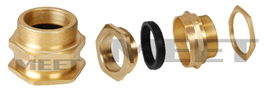
Basic of Current Transformer

Current transformers

Principle of operation of CT

  • A current transformer is defined as “as an instrument transformer in which the secondary current is substantially proportional to the primary current (under normal conditions of operation) and differs in phase from it by an angle which is approximately zero for an appropriate direction of the connections.”
  • Current transformers are usually either “measuring” or “protective” types.

Some Definitions used for CT:

1)    Rated primary current:

  • The value of primary current which appears in the designation of the transformer and on which the performance of the current transformer is based.

2)    Rated secondary current:

  • The value of secondary current which appears in the designation of the transformer and on which the performance of the current transformer is based.
  • Typical values of secondary current are 1 A or 5 A. In the case of transformer differential protection, secondary currents of 1/ root 3 A and 5/ root 3 A are also specified.

3)    Rated burden:

  • The apparent power of the secondary circuit in Volt-amperes expressed at the rated secondary current and at a specific power factor (0.8 for almost all standards)

4)    Rated output:

  • The value of the apparent power (in volt-amperes at a specified power (factor) which the current transformer is intended to supply to the secondary circuit at the rated secondary current and with rated burden connected to it.

5)    Accuracy class:

  • In the case of metering CT s, accuracy class is typically, 0.2, 0.5, 1 or 3.
  • This means that the errors have to be within the limits specified in the standards for that particular accuracy class.
  • The metering CT has to be accurate from 5% to 120% of the rated primary current, at 25% and 100% of the rated burden at the specified power factor.
  • In the case of protection CT s, the CT s should pass both the ratio and phase errors at the specified accuracy class, usually 5P or 10P, as well as composite error at the accuracy limit factor of the CT.

6)    Current Ratio Error:

  • The error with a transformer introduces into the measurement of a current and which arises from the fact that actual transformation ratio is not equal to the rated transformer ratio. The current error expressed in percentage is given by the formula:
  • Current error in % = (Ka(Is-Ip)) x 100 / Ip
  • Where Ka= rated transformation ratio ,Ip= actual primary current, Is= actual secondary current when Ip is flowing under the conditions of measurement

7)    Accuracy limit factor:

  • The value of primary current up to which the CT complies with composite error requirements. This is typically 5, 10 or 15, which means that the composite error of the CT has to be within specified limits at 5, 10 or 15 times the rated primary current.

8)    Short time rating:

  • The value of primary current (in kA) that the CT should be able to withstand both thermally and dynamically without damage to the windings, with the secondary circuit being short-circuited. The time specified is usually 1 or 3 seconds.

9)    Instrument security factor (factor of security):

  • This typically takes a value of less than 5 or less than 10 though it could be much higher if the ratio is very low. If the factor of security of the CT is 5, it means that the composite error of the metering CT at 5 times the rated primary current is equal to or greater than 10%. This means that heavy currents on the primary are not passed on to the secondary circuit and instruments are therefore protected. In the case of double ratio CT’s, FS is applicable for the lowest ratio only.

10) Class PS X CT:

  • In balance systems of protection, CT s with a high degree of similarity in their characteristics is required. These requirements are met by Class PS (X) CT s. Their performance is defined in terms of a knee-point voltage (KPV), the magnetizing current (Imag) at the knee point voltage or 1/2 or 1/4 the knee-point voltage, and the resistance of the CT secondary winding corrected to 75C. Accuracy is defined in terms of the turn’s ratio.

11) Knee point voltage:

  • That point on the magnetizing curve where an increase of 10% in the flux density (voltage) causes an increase of 50% in the magnetizing force (current).
  • The ‘Knee Point Voltage’ (Vkp) is defined as the secondary voltage at which an increase of 10% produces an increase in magnetizing current of 50%. It is the secondary voltage above which the CT is near magnetic saturation.

12) Core balance CT (CBCT):

  • The CBCT, also known as a zero sequence CT, is used for earth leakage and earth fault protection. The concept is similar to the RVT. In the CBCT, the three core cable or three single cores of a three phase system pass through the inner diameter of the CT. When the system is fault free, no current flows in the secondary of the CBCT. When there is an earth fault, the residual current (zero phase sequence current) of the system flows through the secondary of the CBCT and this operates the relay. In order to design the CBCT, the inner diameter of the CT, the relay type, the relay setting and the primary operating current need to be furnished.

13) Phase displacement:

  • The difference in phase between the primary and secondary current vectors, the direction of the vectors being so chosen that the angle is zero for the perfect transformer. The phase displacement is said to be positive when the secondary current vector leads the primary current vector. It is usually express in minutes

14) Highest system voltage:

  • The highest rms line to line voltage which can be sustained under normal operating conditions at any time and at any point on the system. It excludes temporary voltage variations due to fault condition and the sudden disconnection of large loads.

15) Rated insulation level:

  • That combination of voltage values (power frequency and lightning impulse, or where applicable, lightning and switching impulse) which characterizes the insulation of a transformer with regard to its capability to withstand by dielectric stresses. For low voltage transformer the test voltage 4kV, at power-frequency, applied during 1 minute.

16) Rated short-time thermal current (Ith):

  • The rms value of the primary current which the current transformer will withstand for a rated time, with their secondary winding short circuited without suffering harmful effects.

17) Rated dynamic current (Idyn):

  • The peak value of the primary current which a current transformer will withstand, without being damaged electrically for mechanically by the resulting electromagnetic forces, the secondary winding being short-circuited.

18) Rated continuous thermal current (Un)

  • The value of current which can be permitted to flow continuously in the primary winding, the secondary windings being connected to the rated burdens, without the temperature rise exceeding the specified values.

19) Instrument security factor (ISF or Fs):

  • The ratio of rated instrument limits primary current to the rated primary current. The times that the primary current must be higher than the rated value, for the composite error of a measuring current transformer to be equal to or greater than 10%, the secondary burden being equal to the rated burden. The lower this number is, the more protected the connected instrument are against. 

20) Sensitivity

  • Sensitivity is defined as the lowest value of primary fault current, within the protected zone, which will cause the relay to operate. To provide fast operation on an in zone fault, the current transformer should have a ‘Knee Point Voltage’ at least twice the setting voltage of the relay.

21) Field Adjustment of Current Transformer Ratio:

  • The ratio of current transformers can be field adjusted to fulfil the needs of the application.  Passing

more secondary turns or more primary turns through the window will increase or decrease the turns ratio.  

Actual Turns Ratio = (Name Plate Ration- Secondary Turns Added) / Primary Turns.

Types of Current transformers (CT’s)

 According to Construction of CT:

1)    Bar Type:

  • Bar types are available with higher insulation levels and are usually bolted to the current caring device.

Untitled

  • Bar type current transformers are insulated for the operating voltage of the system.
  • Bar-type CTs operate on the same principle of window CTs but have a permanent bar installed as a primary conductor

2)    Wound CT’s:

  • Capacity: There are designed to measure currents from 1 amp to 100 amps.
  • the most common one is the wound type current transformer. The wound type provides excellent performance under a wide operating range. Typically, the wound type is insulated to only 600 volts.

Untitled

  • Since the load current passes through primary windings in the CT, screw terminals are provided for the load and secondary conductors. Wound primary CT’s are available in ratios from 2.5:5 to 100:5.
  • Wound CTs have a primary and secondary winding like a normal transformer. These CTs are rare and are usually used at very low ratios and currents, typically in CT secondary circuits to compensate for low currents, to match different CT ratios in summing applications, or to isolate different CT circuits. Wound CTs have very high burdens, and special attention to the source CT burden should be applied when wound CTs are used.

3)    Window:

  • Window CTs are the most common. They are constructed with no primary winding and are installed around the primary conductor. The electric field created by current flowing through the conductor interacts with the CT core to transform the current to the appropriate secondary output. Window CTs can be of solid or split core construc­tion. The primary conductor must be disconnected when installing solid window CTs. However, split core CTs can be installed around the primary conductor without disconnecting the primary conductor

Untitled

  • Ring Core CT’s :
  • Capacity: There are available for measuring currents from 50 to 5000 amps

Untitled

  • Size: with windows (power conductor opening size) from 1″ to 8″ diameter.
  • Split Core CT’s:
  • Capacity: There are available for measuring currents from 100 to 5000 amps.
  • Size:  with windows in varying sizes from 1″ by 2″ to 13″ by 30″.
  • Split core CT’s have one end removable so that the load conductor or bus bar does not have to be disconnected to install the CT.

4)    Bushing

  • Bushing CTs are window CTs specially constructed to fit around a bush­ing. Usually they cannot be accessed, and their nameplates are found on the transformer or circuit-breaker control cabinets.
  • The bushing type is typically used around the bushing on circuit breakers and transformers and may not have a hard protective outside cover. 
  • Donut type current transformers are typically insulated for 600 volts. To ensure accuracy, the conductor should be positioned in the center of the current transformer opening.

 According to Application of CT:

1)    Measuring CT:

  • The principal requirements of a measuring CT are that, for primary currents up to 120% or 125% of the rated current, its secondary current is proportional to its primary current to a degree of accuracy as defined by its “Class” and, in the case of the more accurate types, that a specified maximum phase angle displacement is not exceeded.
  • A desirable characteristic of a measuring CT is that it should “saturate” when the primary current exceeds the percentage of rated current specified as the upper limit to which the accuracy provisions apply. This means that at these higher levels of primary current the secondary current is less than proportionate. The effect of this is to reduce the extent to which any measuring device connected to the CT secondary is subjected to current Overload.
  • On the other hand the reverse is required of the protective type CT, the principal purpose of which is to provide a secondary current proportional to the primary current when it is several, or many, times the rated primary current. The measure of this characteristic is known as the “Accuracy Limit Factor” (A.L.F.).
  •  A protection type CT with an A.L.F. of 10 will produce a proportional current in the secondary winding (subject to the allowable current error) with primary currents up to a maximum of 10 times the rated current.
  • It should be remembered when using a CT that where there are two or more devices to be operated by the secondary winding, they must be connected in series across the winding. This is exactly the opposite of the method used to connect two or more loads to be supplied by a voltage or power transformer where the devices are paralleled across the secondary winding.
  • With a CT, an increase in the burden will result in an increase in the CT secondary output voltage. This is automatic and necessary to maintain the current to the correct magnitude. Conversely, a reduction in the burden will result in a reduction in the CT secondary output voltage.
  • This rise in secondary voltage output with an increase in burden means that, theoretically, with infinite burden as is the case with the secondary load open circuit, an infinitely high voltage appears across the secondary terminals. For practical reasons this voltage is not infinitely high, but can be high enough to cause a breakdown in the insulation between primary and secondary windings or between either or both windings and the core. For this reason, primary current should never be allowed to flow with no load or with a high resistance load connected across the secondary winding.
  • When considering the application of a CT it should be remembered that the total burden imposed on the secondary winding is not only the sum of the burden(s) of the individual device(s) connected to the winding but that it also includes the burden imposed by the connecting cable and the resistance of the connections.
  • If, for example, the resistance of the connecting cable and the connections is 0.1 ohm and the secondary rating of the CT is 5A, the burden of the cable and connections (RI2) is 0.1 x 5 x 5 = 2.5VA. This must be added to the burden(s) of the connected device(s) when determining whether the CT has an adequately large burden rating to supply the required device(s) and the burden imposed by the connections.
  • Should the burden imposed on the CT secondary winding by the connected device(s) and the connections exceed the rated burden of the CT the CT may partly or fully saturate and therefore not have a secondary current adequately linear with the primary current.
  • The burden imposed by a given resistance in ohms [such as the resistance of a connecting cable] is proportional to the square of the rated secondary current. Therefore, where long runs of cable between CT and the connected device(s) are involved, the use of a 1A secondary CT and a 1A device rather than 5A will result in a 25-fold reduction in the burden of the connecting cables and connections. All burden ratings and calculations are at rated secondary current.
  • Because of the foregoing, when a relatively long [more than a very few meters] cable run is required to connect a CT to its burden [such as a remote ammeter] a calculation should be made to determine the cable burden. This is proportional to the “round trip” resistance, i.e. twice the resistance of the length of twin cable used. Cable tables provide information on the resistance values of different sizes of conductors at 20o C per unit length.

2)    Protective CT:

  • The calculated resistance is then multiplied by the square of the CT secondary current rating [25 for 5A, 1 for 1A]. If the VA burden as calculated by this method and added to the rated burden(s) of the device(s) to be driven by the CT exceeds the CT burden rating, the cable size must be increased [to reduce the resistance and thus the burden] or a CT with a higher VA burden rating must be used, or a lower CT secondary current rating [with matching change in the current rating of the device(s) to be driven] should be substituted

 Nomenclature of CT:

  1. Ratio: input / output current ratio
  2. Burden (VA): total burden including pilot wires. (2.5, 5, 10, 15 and 30VA.)
  3. Class: Accuracy required for operation (Metering: 0.2, 0.5, 1 or 3, Protection: 5, 10, 15, 20, 30).
  4. Accuracy Limit Factor:
  5. Dimensions: maximum & minimum limits
  6. Nomenclature of CT: Ratio, VA Burden, Accuracy Class, Accuracy Limit Factor.
  7. Example: 1600/5, 15VA 5P10  (Ratio: 1600/5, Burden: 15VA, Accuracy Class: 5P, ALF: 10)
  8. As per IEEE Metering CT: 0.3B0.1 rated Metering CT is accu­rate to 0.3 percent if the connected secondary burden if imped­ance does not exceed 0.1 ohms.
  9. As per IEEE Relaying (Protection) CT: 2.5C100 Relaying CT is accurate within 2.5 percent if the secondary burden is less than 1.0 ohm (100 volts/100A).

 1)   Current Ratio of CT:

  • The primary and secondary currents are expressed as a ratio such as 100/5. With a 100/5 ratio CT, 100A flowing in the primary winding will result in 5A flowing in the secondary winding, provided the correct rated burden is connected to the secondary winding. Similarly, for lesser primary currents, the secondary currents are proportionately lower.
  • It should be noted that a 100/5 CT would not fulfil the function of a 20/1 or a 10/0.5 CT as the ratio expresses the current rating of the CT, not merely the ratio of the primary to the secondary currents.
  • The rated secondary current is commonly 5A or 1A, though lower currents such as 0.5A are not uncommon. It flows in the rated secondary load, usually called the burden, when the rated primary current flows in the primary winding.
  • Increasing or Decreasing Turns Ratio of CT: 
  • Increasing Number of Turn: Increasing the number of primary turns can only decrease the turn’s ratio. A current transformer with a 50 to 5 turn’s ratio can be changed to a 25 to 5 turn’s ratio by passing the primary twice through the window. 
  • Increasing or Decreasing Turns Ratio:
  • The turn’s ratio can be either increased or decreased by wrapping wire from the secondary through the window of the current transformer.
  • Increasing the turn’s ratio with the secondary wire, turns on the secondary are essentially increased. A 50 to 5 current transformer will have a 55 to 5 ratio when adding a single secondary turn.
  • Decreasing the turn’s ratio with the secondary wire, turns on the secondary are essentially decreased.  A 50 to 5 current transformer will have a 45 to 5 ratio when adding a single secondary turn.
  • Decreasing the turn’s ratio with the primary, accuracy and VA burden ratings are the same as the original configuration.
  • Increasing the turn’s ratio with the secondary will improve the accuracy and burden rating.
  • Decreasing the turn’s ratio with the secondary will worsen the accuracy and burden rating.
  • When using the secondary of a current transformer to change the turn’s ratio, the right hand rule of magnetic fields comes into play.  Wrapping the white lead or the X1 lead from the H1 side of the transformer through the window to the H2 side will decrease the turn’s ratio.  Wrapping this wire from the H2 side to the H1 side will increase the turn’s ratio.
  • Using the black or X2 lead as the adjustment method will do the opposite of the X1(white) lead.  Wrapping from the H1 to the H2 side will increase the turns ratio, and wrapping from the H2 to the H1 side will decrease the turns ratio.

 2)   Burden of CT:

  • Common burden ratings of CT: 2.5, 5, 10, 15 and 30VA.
  • The external load applied to the secondary of a current transformer is called the “burden”.
  • The burden of CT is the maximum load (in VA) that can be applied to the CT secondary.
  • The burden can be expressed in two ways.
  • The burden can be expressed as the total impedance in ohms of the circuit or the total volt-amperes (VA) and power factor at a specified value of current or voltage and frequency.
  • Formerly, the practice was to express the burden in terms of volt-amperes (VA) and power factor, the volt-amperes being what would be consumed in the burden impedance at rated secondary current (in other words, rated secondary current squared times the burden impedance). Thus, a burden of 0.5Ωimpedance may be expressed also as “12.5 VA at 5 amperes,” if we assume the usual 5-ampere secondary rating. The VA terminology is no longer standard, but it needs defining because it will be found in the literature and in old data.

Burden for Measuring CT:

  • Total burden of Measuring CT = Sum of Meters Burden in VA (Ammeter, Wattmeter, Transducer etc.) connected in series to the CT secondary circuit + Connecting Secondary Circuit Cable Burden in VA.
  • Cable burden = I2 x R x2 L, where I = CT secondary current, R = cable resistance per length, 2L is the tro &fro distance of cable length L from CT to metering circuits. If the proper size and short length of wire is used, cable burden can be ignored.
  • The CT secondary circuit load shall not be more than the CT VA rating. If the load is less than the CT burden, all meters connected to the measuring CT should provide correct reading.
  • In the case of Measuring Current transformer, the burden depends on the connected meters and quantity of meters on the secondary i.e. no of Ammeters, KWh meters, Kvar meters, Kwh meters, transducers and also the connection cable burden (I2 x R x2 L) to metering shall be taken into account.
  • Note Meters burden can be obtained from manufacturer catalogue.
  • Selected CT burden shall be more than the calculated burden

Burden for Protecting CT:

  • In the case of Protection CTs the burden is calculated in the same way as above except the burden of individual protective relays burden shall be considered instead of meters. The connecting cable burden is calculated in the same way as metering CT
  • Total burden of Protection CT=Connecting cable Burden in VA + sum of Protective relays Burden in VA.
  • All manufacturers can supply the burden of their individual devices. Although not used very often these days, induction disk over-current devices always gave the burden for the minimum tap setting. To determine the impedance of the actual tap setting being used, First Square the ratio of minimum divide by the actual tap setting used and, second multiply this value by the minimum impedance.
  • Suppose an impedance of 1.47 + 5.34j at the 1A tap. To apply the relay at the 4A tap the engineer would multiply the impedance at the 1A taps setting by (1/4)2. The impedance at the 4A tap would be 0.0919 + 0.3338j or 0.3462 Z at 96.4 power factor.
  • The CT burden impedance decreases as the secondary current increases, because of saturation in the magnetic circuits of relays and other devices. Hence, a given burden may apply only for a particular value of secondary current. The old terminology of volt-amperes at 5 amperes is most confusing in this respect since it is not necessarily the actual volt amperes with 5 amperes flowing, but is what the volt-amperes would be at 5 amperes
  • If there were no saturation. Manufacturer’s publications give impedance data for several values of over current for some relays for which such data are sometimes required. Otherwise, data are provided only for one value of CT secondary current.
  •  If a publication does not clearly state for what value of current the burden applies, this information should be requested. Lacking such saturation data, one can obtain it easily by test. At high saturation, the impedance approaches the DC resistance. Neglecting the reduction in impedance with saturation makes it appear that a CT will have more inaccuracy than it actually will have. Of course, if such apparently greater inaccuracy can be tolerated, further refinements in calculation are unnecessary. However, in some applications neglecting the effect of saturation will provide overly optimistic results; consequently, it is safer always to take this effect into account.
  • It is usually sufficiently accurate to add series burden impedances arithmetically. The results will be slightly pessimistic, indicating slightly greater than actual CT ratio inaccuracy. But, if a given application is so borderline that vector addition of impedances is necessary to prove that the CTÕs will be suitable, such an application should be avoided.
  • If the impedance at pickup of a tapped over current-relay coil is known for a given pickup tap, it can be estimated for pickup current for any other tap. The reactance of a tapped coil varies as the square of the coil turns, and the resistance varies approximately as the turns. At pickup, there is negligible saturation, and the resistance is small compared with the reactance. Therefore, it is usually sufficiently accurate to assume that the impedance varies as the square of the turns. The number of coil turns is inversely proportional to the pickup current, and therefore the impedance varies inversely approximately as the square of the pickup current.
  • Whether CT is connected in wye or in delta, the burden impedances are always connected in wye. With wye-connected CT the neutrals of the CT and of the burdens are connected together, either directly or through a relay coil, except when a so-called zero phase-sequence-current shunt is used.
  • It is seldom correct simply to add the impedances of series burdens to get the total, whenever two or more CT are connected in such a way that their currents may add or subtract in some common portion of the secondary circuit. Instead, one must calculate the sum of the voltage drops and rises in the external circuit from one CT secondary terminal to the other for assumed values of secondary currents flowing in the various branches of the external circuit. The effective CT burden impedance for each combination of assumed currents is the calculated CT terminal voltage divided by the assumed CT secondary current. This effective impedance is the one to use, and it may be larger or smaller than the actual impedance which would apply if no other CTÕs were supplying current to the circuit.
  • If the primary of an auxiliary CT is to be connected into the secondary of a CT whose accuracy is being studied, one must know the impedance of the auxiliary CT viewed from its primary with its secondary short-circuited. To this value of impedance must be added the impedance of the auxiliary CT burden as viewed from the primary side of the auxiliary CT; to obtain this impedance, multiply the actual burden impedance by the square of the ratio of primary to secondary turns of the auxiliary CT. It will become evident that, with an auxiliary CT that steps up the magnitude of its current from primary to secondary, very high burden impedances, when viewed from the primary, may result.
  • Burden is depending on pilot lead length
  • For Metering Class CTs burden is expressed as ohms impedance. For Protection-class CTs burden is express as volt-amperes (VA).
VA Applications
1 To 2 VA Moving iron ammeter
1 To 2.5VA Moving coil rectifier ammeter
2.5 To 5VA Electrodynamics instrument
3 To 5VA Maximum demand ammeter
1 To 2.5VA Recording ammeter or transducer
  • Burden (VA) of copper wires between instrument & current transformer for 1A and 5A secondary’s
Cross Section (mm2)

CT  1 Amp Secondary Burden in VA (Twin Wire)

Distance

10 meter 20 meter 40 meter 60 meter 80 meter 100 meter

1.0

0.35

0.71

1.43

2.14

2.85

3.57

1.5

0.23

0.46

0.92

1.39

1.85

2.31

2.5

0.14

0.29

0.57

0.86

1.14

1.43

4.0

0.09

0.18

0.36

0.54

0.71

0.89

6.0

0.06

0.12

0.24

0.36

0.48

0.6


Cross Section (mm2)

CT  5 Amp Secondary Burden in VA (Twin Wire)

Distance

1 meter 2 meter 4 meter 6 meter 8 meter 10 meter

1.5

0.58

1.15

2.31

3.46

4.62

5.77

2.5

0.36

0.71

1.43

2.14

2.86

3.57

4.0

0.22

0.45

0.89

1.34

1.79

2.24

6.0

0.15

0.30

0.60

0.89

1.19

1.49

10.0

0.09

0.18

0.36

0.54

0.71

0.89

 CT Burden Calculation:

  • The Actual burden is formed by the resistance of the pilot conductors and the protection relay(s). The resistance of a conductor (with a constant cross-sectional area) can be calculated from the equation:
  • R =ƿxL / A
  • where ƿ  = resistivity of the conductor material (given typically at +20°C) ,L= length of the conductor , A = cross sectional area
  • If the resistivity is given in μΩm, the length in meters and the area in mm2, the equation 1 will give the resistance directly in ohms.
  • Resistivity: Copper 0.0178 µΩm at 20 °C and 0.0216 µΩm at 75 °C

Burden of CT for 4 or 6 wire connection:

  • If 6-wire connection is used, the total length of the wire, naturally, will be two times the distance between the CT and the relay.  However, in many cases a common return conductor is used as shown in figure then, instead of multiplying the distance by two, a factor of 1.2 is typically used. This rule only applies to the 3-phase connection only.  The factor 1.2 allows for a situation, where up to 20% of the electrical conductor length, including terminal resistances, uses 6-wire connection and at least 80% 4-wire connection.

  • Example: the distance between the CT and the relay is 5 meters the total length is 2 x 5 m = 10 meter for 6-wire connection, but only 1.2 x 5 m = 6.0 meter when 4-wire connection is used.

Burden of the relay:

  • Example: The Distance between the CTs and the protection relay is 15 meters, 4 mm2 Cu conductors in 4-wire connection are used. The burden of the relay input is less than 20 mΩ (5 A inputs). Calculate the actual burden of the CT at 75°C , the input impedance is less than 0.020 Ω for a 5 A input (i.e. burden less than 0.5 VA) and less than 0.100 Ω for a 1 A input (i.e. less than 0.1 VA):
  • Solution:
  • ƿ = 0.0216 µΩm (75°C) for copper conductor.
  • R =ƿxL / A ,R = 0.0216 µΩm x (1.2 x 15 m) / 4 mm2 = 0.097 Ω
  • Burden of CT = 0.097 Ω + 0.020 Ω = 0.117 Ω.
  • Using CTs of burden values higher than required, is unscientific since it leads to inaccurate reading (meter) or inaccurate sensing of fault / reporting conditions.
  • Basically, such high value of design burden extends saturation characteristics of CT core leading to likely damage to the meter connected across it under overload condition. e.g. When we expect security factor (ISF) to be 5, the secondary current should be restricted to less than 5 times in case primary current shoots to more than 5 times its rated value.
  • In such an overload condition, the core of CT is desired to go into saturation, restricting the secondary current thus the meter is not damaged. However, when we ask for higher VA, core doesn’t go into saturation due to less load (ISF is much higher than desired) which may damage the meter.
  • To understand the effect on Accuracy aspect, let’s take an example of a CT with specified burden of 15 VA, and the actual burden is 2.5 VA:15 VA CT with less than 5 ISF will have saturation voltage of 15 Volts (15/5×5), and actual burden of 2.5 VA the saturation voltage required shall be ( 2.5/5 x 5) 2.5 Volts against 15 Volts resulting ISF = 30 against required of 5.
  • Example: Decide  Whether 5A,20VA CT is sufficient for following circuit

Untitled

  • Total instrument burden = 2 + 2 + 3 + 2 + 4 = 13V A.
  • Total pilot load resistance = 2 x 0.1 = 0.2 ohm.
  • With 5A secondary current, volt-drop in leads is 5 x 0.2 = 1 V.
  • Burden imposed by both leads = 5A x 1 V = 5V A.
  • Total burden on CT = 13 + 5 = 18V A. 
  • As the CT is rated 20V A, it has sufficient margin.

3)   Accuracy Class of CT:

  • The CT accuracy is determined by its certified accuracy class which is stamped on nameplate. For example, CT accuracy class of 0.3 means that the CT is certified by the manufacturer to be accurate to within 0.3 percent of its rated ratio value for a primary current of 100 percent of rated ratio.
  • CT with a rated ratio of 200/ 5 with accuracy class of 0.3 would operate within 0.45 percent of its rated ratio value for a primary current of 100 amps. To be more explicit, for a primary current of 100A it is certified to produce a secondary current between 2.489 amps and 2.511 amps.
  • Accuracy is specified as a percentage of the range, and is given for the maximum burden as expressed in VA.  The total burden includes the input resistance of the meter and the loop resistance of the wire and connections between the current transformer and meter.
  • Example: Burden = 2.0 VA. Maximum Voltage drop = 2.0 VA / 5 Amps = 0.400 Volts.
  •  Maximum Resistance = Voltage / Current = 04.00 Volts / 5 Amps =0.080 Ohms.
  • If the input resistance of the meter is 0.010Ω, then 0.070Ω is allowed for loop resistance of the wire, and connections between the current transformer and the meter. The length and gauge of the wire must be considered in order to avoid exceeding the maximum burden.
  • If resistance in the 5 amp loop causes the burden to be exceeded, the current will drop. This will result in the meter reading low at higher current levels.
  • As in all transformers, errors arise due to a proportion of the primary input current being used to magnetize the core and not transferred to the secondary winding. The proportion of the primary current used for this purpose determines the amount of error.
  • The essence of good design of measuring current transformers is to ensure that the magnetizing current is low enough to ensure that the error specified for the accuracy class is not exceeded.
  • This is achieved by selecting suitable core materials and the appropriate cross-sectional area of core. Frequently in measuring currents of 50A and upwards, it is convenient and technically sound for the primary winding of a CT to have one turn only.
  • In these most common cases the CT is supplied with a secondary winding only, the primary being the cable or bus bar of the main conductor which is passed through the CT aperture in the case of ring CTs (i .e. single primary turn) it should be noted that the lower the rated primary current the more difficult it is (and the more expensive it is) to achieve a given accuracy.
  • Considering a core of certain fixed dimensions and magnetic materials with a secondary winding of say 200 turns (current ratio 200/1 turns ratio 1/200) and say it takes 2 amperes of the 200A primary current to magnetize the core, the error is therefore only 1% approximately. However considering a 50/1 CT with 50 secondary turns on the same core it still takes 2 amperes to magnetize to core. The error is then 4% approximately. To obtain a 1% accuracy on the 50/1 ring CT a much larger core and/or expensive core material is required
  • Accuracy Class of Metering CT:

Metering Class CT

Class Applications
0.1 To 0.2 Precision measurements
0.5 High grade kilowatt hour meters for commercial grade kilowatt hour meters
3 General industrial measurements
3 OR 5 Approximate measurements


Protective System CT Secondary VA Class
Per current for phase & earth fault 1A 2.5 10P20 Or 5P20
5A 7.5 10P20 Or 5P20
Unrestricted earth fault 1A 2.5 10P20 Or 5P20
5A 7.5 10P20 Or 5P20
Sensitive earth fault 1A or 5A   Class PX use relay manufacturers formula
Distance protection 1A or 5A   Class PX use relay manufacturers formula
Differential protection 1A or 5A   Class PX use relay manufacturers formula
High impedance differential impedance 1A or 5A   Class PX use relay manufacturers formula
High speed feeder protection 1A or 5A   Class PX use relay manufacturers formula
Motor protection 1A or 5A 5 5P10
  • Accuracy Class of  Letter of CT:

Metering Class CT

Accuracy Class Applications

B

Metering Purpose

Protection Class CT

C

CT has low leakage flux.

T

 CT can have significant leakage flux.

H

 CT accuracy is applicable within the entire range of secondary currents from 5 to 20 times the nominal CT rating. (Typically wound CTs.)

L

 CT accuracy applies at the maximum rated secondary burden at 20 time rated only. The ratio accuracy can be up to four times greater than the listed value, depending on connected burden and fault current. (Typically window, busing, or bar-type CTs.)
  • Accuracy Class of Protection CT:
Class Applications
10P5 Instantaneous over current relays & trip coils: 2.5VA
10P10 Thermal inverse time relays: 7.5VA
10P10 Low consumption Relay: 2.5VA
10P10/5 Inverse definite min. time relays (IDMT) over current
10P10 IDMT Earth fault relays with approximate time grading:15VA
5P10 IDMT Earth fault relays with phase fault stability or accurate time grading: 15VA
  •  Accuracy Class: Metering Accuracy as per IEEE C37.20.2b-1994


Ratio B0.1 B0.2 B0.5 B0.9 B1.8 Relaying Accuracy
50:5 1.2 2.4 C or T10
75:5 1.2 2.4 C or T10
100:5 1.2 2.4 C or T10
150:5 0.6 1.2 2.4 C or T20
200:5 0.6 1.2 2.4 C or T20
300:5 0.6 1.2 2.4 2.4 C or T20
400:5 0.3 0.6 1.2 1.2 2.4 C or T50
600:5 0.3 0.3 0.3 1.2 2.4 C or T50
800:5 0.3 0.3 0.3 0.3 1.2 C or T50
1200:5 0.3 0.3 0.3 0.3 0.3 C100
1500:5 0.3 0.3 0.3 0.3 0.3 C100
2000:5 0.3 0.3 0.3 0.3 0.3 C100
3000:5 0.3 0.3 0.3 0.3 0.3 C100
4000:5 0.3 0.3 0.3 0.3 0.3 C100

Important of accuracy & phase angle

  • Current error is an error that arises when the current value of the actual transformation ratio is not equal to rated transformation ratio.
  • Current error (%) = {(Kn x Is – Ip) x 100}/Ip
  • Kn = rated transformation ratio, Ip = actual primary current, Is = actual secondary current
  • Example: In case of a 2000/5A class 1 5VA current transformer
  • Kn = 2000/5 = 400 turn, Ip = 2000A, Is = 4.9A
  • Current error = ((400 x 4.9 – 2000) x100)/2000 = -2%
  • For protection class current transformer, the accuracy class is designed by the highest permissible percentage composite error at the accuracy limit primary current prescribed for the accuracy class concerned.
  • Accuracy class includes: 5P, 10P

By phase angle

  • Phase error is the difference in phase between primary & secondary current vectors, the direction of the vectors to be zero for a perfect transformer.
  • You will experience a positive phase displacement when secondary current vector lead primary current vector.
  • Unit of scale expressed in minutes / cent radians.
  • Circular measure = (unit in radian) is the ratio of the distance measured along the arc to the radius.
  • Angular measure = (unit in degree) is obtained by dividing the angle subtended at the center of a circle into 360 deg equal division known as “degrees”.
  • Limits of current error and phase displacement for measuring current transformer (Classes 0.1 To 1)

Accuracy

Class

+/- Percentage Current (Ratio) Error at % Rated Current

+/- Phase Displacement at % Rated Current

                  Minutes

Centi radians

5

20

100

120

5

20

100

120

5

20

100

120

0.1

0.4

0.2

0.1

0.1

15

8

5

5

0.45

0.24

0.15

0.15

0.2

0.75

0.35

0.2

0.2

30

15

10

10

0.9

0.45

0.3

0.3

0.5

1.5

0.75

0.5

0.5

90

45

30

30

2.7

1.35

0.9

0.9

1.0

3

1.5

1

1

180

90

60

60

5.4

2.7

1.8

1.8

  •  limits of current error and phase displacement for measuring current transformer For special application

Accuracy

Class

+/- Percentage Current (Ratio) Error at % Rated Current

+/- Phase Displacement at % Rated Current

Minutes

Centi radians

1

5

20

100

120

1

5

20

100

120

1

5

20

100

120

0.2S

0.75

0.35

0.2

0.2

0.2

30

15

10

10

10

0.9

0.4

0.3

0.3

0.3

0.5S

1.50

0.75

0.5

0.5

0.5

90

45

30

30

30

2.7

1.3

0.9

0.9

0.9

  •  limits of current error for measuring current transformers (classes 3 and 5)

Accuracy Class

+/- Percentage Current (Ratio) Error at % Rated Current


50

120


3

3

3


5

5

5


 Class X Current Transformer:

  • Class X current transformer is use in conjunction with high impedance circulating current differential protection relay, eg restricted earth fault relay. As illustrated in IEC60044-1, the class X current transformer is needed.
  • The following illustrates the method to size a class X current transformer.
  • Step 1: calculating knee point voltage Vkp
  • Vkp = {2 x Ift (Rct+Rw)}/ k
  • Vkp = required CT knee point voltage, Ift = max transformer through fault in ampere
  • Rct = CT secondary winding resistance in ohms, Rw = loop impedance of pilot wire between CT and the
  • K = CT transformation ratio
  • Step 2: calculate Transformer through fault Ift
  • Ift = (KVA x 1000)/ (1.732 x V x Impedance)
  • KVA = transformer rating in kVA , V = transformer secondary voltage, Impedance = transformer impedance
  • Step 3: How to obtain Rct
  • To measure when CT is produce
  • Step 4: How to obtain Rw
  • This is the resistance of the pilot wire used to connect the 5th class X CT at the transformer star point to the relay
  • In the LV switchboard. Please obtain this data from the Electrical contractor or consultant. We provide a table to Serve as a general guide on cable resistance.
  • Example:
  • Transformer Capacity: 2500kVA
    Transformer impedance: 6%
    Voltage system : 22kV / 415V 3phase 4 wire
    Current transformer ratio: 4000/5A
    Current transformer type: Class X PR10
    Current transformer Vkp : 185V
    Current transformer Rct  : 1.02½ (measured)
    Pilot wire resistance Rw : 25 meters using 6.0mm sq cable        
    = 2 x 25 x 0.0032 = 0.16½
    Ift = (kVA x 1000) / (1.732 x V x impedance) = (2500 x 1000) / (1.732 x 415 x 0.06)= 57,968 (Say 58,000A)
    Vkp = {2 x Ift (Rct+Rw)} / k= {2 x 58000 (1.02+0.16)} / 800= 171.1½.

 4)   Accuracy Limit Factor:

  • Standard Accuracy Limit Factors:  5, 10, 15, 20 and 30.
  • Accuracy of a CT is another parameter which is also specified with CT class. For example, if a measuring CT class is 0.5M (or 0.5B10), the accuracy is 99.5% for the CT, and the maximum permissible CT error is only 0.5%.
  • Accuracy limit Factor is defined as the multiple of rated primary current up to which the transformer will comply with the requirements of ‘Composite Error’. Composite Error is the deviation from an ideal CT (as in Current Error), but takes account of harmonics in the secondary current caused by non-linear magnetic conditions through the cycle at higher flux densities.
  • The electrical requirements of a protection current transformer can therefore be defined as :
  • Selection of Accuracy Class & Limit Factor.
  • Class 5P and 10P protective current transformers are generally used in over current and unrestricted earth leakage protection. With the exception of simple trip relays, the protective device usually has an intentional time delay, thereby ensuring that the severe effect of transients has passed before the relay is called to operate. Protection Current Transformers used for such applications are normally working under steady state conditions Three examples of such protection is shown. In some systems, it may be sufficient to simply detect a fault and isolate that circuit. However, in more discriminating schemes, it is necessary to ensure that a phase to phase fault does not operate the earth fault relay.
  • Calculation of the Accuracy limit factor
  • Fa=Fn X ( (Sin+Sn) / (Sin+Sa) )
  • Fn = Rated Accuracy Limit Factor, Sin = Internal Burden of CT secondary Coil
  • Sn= Rated Burden of CT (in VA), Sa= Actual Burden of CT (in VA)
  • Example: The internal secondary coil resistance of the CT(5P20) is 0.07 Ω, the secondary burden (including wires and relay) is 0.117 Ω and the CT is rated 300/5, 5P20, 10 VA. Calculate the actual accuracy limit factor.
  • Fn = 20 (CT data 5P20), Sin = (5A)2 × 0.07 Ω =1.75 VA, Sn = 10 VA (from CT data),
  • Sa = (5A)2 × 0.117 Ω = 2.925 VA
  • Accuracy limit factor ALF (Fa) = 20 X ((1.75+10) / (1.75+2.925)) =50.3

Selection of CT:

1)    Indoors or Out Door:

  • Determine where CT needs to be used. Indoor transformers are usually less costly than outdoor transformers. Obviously, if the current transformer is going to be enclosed in an outdoor enclosure, it need not be rated for outdoor use. This is a common costly error in judgment when selecting current transformers.

2)    What do We need:

  • The first thing we need to know that what degree of accuracy is required. Example, if you simply want to know if a motor is lightly or overloaded, a panel meter with 2 to 3% accuracy will likely suit for needs. In that case the current transformer needs to be only 0.6 to 1.2% accurate. On the other hand, if we are going to drive a switchboard type instrument with 1% accuracy, we will want a current transformer with 0.3 to 0.6 accuracy. We must keep in mind that the accuracy ratings are based on rated primary current flowing and per ANSI standards may be doubled (0.3 becomes 0.6%) when 10% primary current flows. As mentioned earlier, the rated accuracies are at stated burdens. We must take into consideration not only the burden of the load (instrument) but you must consider the total burden. The total burden includes the burden of the current transformers secondary winding, the burden of the leads connecting the secondary to the load, and the burden of the load itself. The current transformer must be able to support the total burden and to provide the accuracy required at that burden. If we are going to drive a relay you must know what relay accuracy the relay will require.

3)    Voltage Class:

  • You must know what the voltage is in the circuit to be monitored. This will determine what the voltage class of the current transformer must be as explained earlier.

4)    Primary Conductor:

  • If you have selected a current transformer with a window you must know the number, type and size of the primary conductor(s) in order to select a window size which will accommodate the primary conductors.

5)    Application:

  • The variety of applications of current transformers seems to be limited only by ones imagination. As new electronic equipment evolves and plays a greater role in the generation, control and application of electrical energy, new demands will be placed upon current transformer manufacturers and designers to provide new products to meet these needs

6)    Safety:

  • For personnel and equipment safety and measurement accuracy, current measurements on conductors at high voltage should be made only with a conducting shield cylinder placed inside the CT aperture. There should be a low electrical impedance connection from one end only to a reliable local ground. An inner insulating cylinder of adequate voltage isolation should be between the shield cylinder and the conductor at high voltage. Any leakage, induced or breakdown current between the high voltage conductor and the ground shield will substantially pass to local ground rather than through the signal cable to signal ground. Do not create a “current loop” by connecting the shield cylinder to ground from both ends. Current flowing in this loop will also be measured by the CT.

7)     CT output signal termination:

  • The CT output coaxial cable should preferably be terminated in 50 ohms. CT characteristics are guaranteed only when CT is terminated in 50 ohms.  The termination should present sufficient power dissipation capability.  When CT output is terminated in 50 ohms, its sensitivity is half that when terminated in a high-impedance load.

 Installing of CT:

  • Measurements must have the same polarity to keep the power factor and direction of power flow measurements accurate and consistent.
  • Most CTs are labelled that shows which side of the CT should face either the source or the load.


  • Primary Side : The Primary of CT is marked with H1 and H2 ( or only marking dot on one side)
  • The label “H1” or dot defines the direction as flowing current into the CT (H1 or the dot should face the Power source side). H2 side to load facing direction
  • Secondary Side: The Secondary (The output wires) of CT is marked with X1 and X2.
  •  X1 corresponds to H1, or the input side.The X1 secondary terminal is the polarity terminal. The polarity marks of a current transformer indicate that when a primary current enters at the polarity mark (H1) of the primary, a current in phase with the primary current and proportional to it in magnitude will leave the polarity terminal of the secondary (X1).
  •  Normally CT’s should not be installed on live services. The power should be disconnected when the CT’s are installed. Many times this is not possible because of critical loads such as computers, laboratories, etc. that cannot be shut down. Split core CT’s should not be installed on live un insulated bus bars under any conditions.

Modification of Primary & Secondary Turns Ratio:

  • The nameplate current ratio of the current transformer is based on the condition that the primary conductor will be passed once through the transformer opening. If necessary, this rating can be reduced in even multiples by looping this conductor two or more times through the opening.
  • A transformer having a rating of 300 amperes will be changed to 75 amperes if four loops or turns are made with the primary cable.
  • The ratio of the current transformer can be also modified by altering the number of secondary turns by forward or back-winding the secondary lead through the window of the current transformer.
  • By adding secondary turns, the same primary amperage will result in a decrease in secondary output.
  • By subtracting secondary turns, the same primary amperage will result in greater secondary output. Again using the 300:5 example, adding two secondary turns will require 310 amps on the primary to maintain the 5 amp secondary output or 62/1p = 310p/5s.
  • Subtracting two secondary turns will only require 290 amps on the primary to maintain the 5 amp secondary output or 58s/5p = 290p/5s. The ratio modifications are achieved in the following manner:
  • To add secondary turns, the white lead should be wound through the CT from the side opposite the polarity mark.
  • To subtract turns, the white lead should be wound through the CT from the same side as the polarity mark.

1)    Modifications in Primary Turns Ratio of CT:

  • The ratio of the current transformer can be modified by adding more primary turns to the transformer. By adding primary turns, the current required to maintain five amps on the secondary is reduced.
  • Ka = Kn X (Nn/Na)
  • Ka= Actual Turns Ration.
  • Kn=Name Plate T/C Ratio.
  • Nn=Name Plate Number of Primary Turns.
  • Na=Actual Number of Primary Turns.
  • Example: 100:5 Current Transformers.

Untitled

2)    Modifications in Secondary Turns Ratio of CT:

  • Formula  : Ip/Is = Ns/Np
  • Ip = Primary Current , Is = Secondary Current , Np = No of Primary Turns, Ns = No of Secondary Turns
  • Example: A 300:5 Current Transformer.
  • The ratio of the current transformer can be modified by altering the number of secondary turns by forward or back winding the secondary lead through the window of the current transformer.
  • By adding secondary turns, the same primary current will result in a decrease in secondary output. By subtracting secondary turns, the same primary current will result in greater secondary output.
  • Again using the 300:5 example adding five secondary turns will require 325 amps on the primary to maintain the 5 amp secondary output or:  325 p / 5s = 65s / 1p
  • Deducting 5 secondary turns will only require 275 amps on the primary to maintain the 5 amp secondary output or: 275p / 5s = 55s / 1p
  • The above ratio modifications are achieved in the following manner:

  • Current Transformer Ratio Modification:

CT Ratio

Number of Primary Turns

Modified Ratio

100:5A

2

50:5A

200:5A

2

100:5A

300:5A

2

150:5A

100:5A

3

33.3:5A

200:5A

3

66.6:5A

300:5A

3

100:5A

100:5A

4

25:5A

200:5A

4

50:5A

300:5A

4

75:5A

  • A primary turn is the number of times the primary conductor passes through the CT’s window. The main advantage of this ratio modification is you maintain the accuracy and burden capabilities of the higher ratio. The higher the primary rating the better the accuracy and burden rating.
  • You can make smaller ratio modification adjustments by using additive or subtractive secondary turns.
  •  For example, if you have a CT with a ratio of 100:5A. By adding one additive secondary turn the ratio modification is 105:5A, by adding on subtractive secondary turn the ratio modification is 95:5A.
  • Subtractive secondary turns are achieved by placing the “X1” lead through the window from the H1 side and out the H2 side. Additive secondary turns are achieved by placing the “X1” lead through the window from the H2 and out the H1 side.
  • So, when there is only one primary turn each secondary turn modifies the primary rating by 5 amperes. If there is more than one primary turn each secondary turn value is changed (i.e. 5A divided by 2 primary turns = 2.5A).
  •  The following table illustrates the effects of different combination of primary and secondary turns:

CT RATIO 100:5A

PRIMARY TURNS

SECONDARY TURNS

RATIO ADJUSTMENT

1

-0-

100:5A

1

1+

105:5A

1

1-

95:5A

2

-0-

50:5A

2

1+

52.5:5A

2

2-

45.0:5A

3

-0-

33.3:5A

3

1+

34.97:5A

3

1-

31.63:5A

Advantages of using a CT having 1A Secondary:

  • The standard CT secondary current ratings are 1A & 5A,The selection is based on the lead burden used for connecting the CT to meters/Relays.5A CT can be used where Current Transformer & protective’s device are located within same Switchgear Panel.
  • 1A CT is preferred if CT leads goes out of the Switchgear.
  • For Example if CT is located in Switch Yard & CT leads have to be taken to relay panels located in control room which can be away.1A CT is preferred to reduce the load burden. For CT with very High lead length, CT with Secondary current rating of 0.5 Amp can be used.
  • In large Generator Circuits, where primary rated current is of the order of few kilo-amperes only,5A CTs are used, 1A CTs are not preferred since the turns rations becomes very high & CT becomes unwieldy.

Danger with Current Transformer:

  • When a CT secondary circuit is closed, current flows through it, which is an exact proportion of the primary current, regardless of the resistance of the burden. In the CT have a ratio of 1OOO/5A and to have 1OOOA flowing in the primary is carrying exactly 5A.

Untitled

  • If the secondary terminals S1 and S2 are short- circuited, there is no voltage between them.
  • If now the short-circuit be replaced by a resistance of, say, 0.5 ohm the same 5A will flow through, causing a volt-drop of 2.5V and a burden of 5 x 2.5 = 12.5V A. If the resistance were increased to 5 ohms the terminal voltage with 5A flowing would rise to 25V and the burden to 125V A.
  • The greater the resistance, the greater would be the voltage and burden until, as it approached infinity (the open-circuit condition), so also in theory would the voltage (and burden) become infinite. This cannot of course happen in practice because the CT would saturate or the terminals flash over due to the very high secondary voltage between them. But it does show the danger of open-circuiting the secondary of running CT. lethal voltages can be produced at the point of opening. This is why CT secondaries are never fused.
  • The danger from an open-circuited CT is twofold. It can produce lethal voltages and so is a very real danger to personnel. The high voltage across the secondary winding could also cause insulation failure in that winding, leading at best to inaccuracy and at worst to burn- out or fire.
  • Before ever an instrument or relay is removed from the secondary loop of a running CT (if such a thing had to be done), the wires feeding that instrument must first be securely short- circuited at a suitable terminal box or, better, at the CT itself. Similarly, if a running CT is ever to be taken out of circuit, it must first be firmly shorted. CTs with 1 A secondary’s are more dangerous than those with 5A, as the induced voltages are higher.
  • Ammeter resistance is very low ,the current transformer normally works short circuited.
  • If for any reason the ammeter is taken out of secondary winding then the secondary winding must be short circuited with the help of short circuit switch .
  • If this is not done, then due to high m.m.f. will set up high flux in the core and it will produces excessive core loss which produce heat and high voltage across the secondary terminals
  • Hence the secondary of current transformer is never left open

 Sizing of CT for Building:

  • New construction: size the CT to handle about 80% of the circuit breaker capacity. If the building is served by a 2000 amp breaker, use 1600 amp (2000 x 0.8) CT’s.
  • Older buildings: the peak demand can generally be determined from the power company or from past billings. In this case add 20 to 30% to the peak demand and size the CT’s for this load. If the peak demand was 500 kW, the peak current on a 480/3/60 system would be 500,000 / (480 x 1.73 x 0.9 pf) = 669 amps. This assumes a 0.9 power factor. (Peak current would be higher with a lower power Factor.) Use CT’s about 20% larger. 800:5 CT’s would be a good selection.
  • For older buildings with no demand history, size the CT’s the same as for new construction. Where possible, use multi-tap CT’s so that the ratio can be reduced if the maximum load is much less than 80% of the breaker size.
  • CT’s that are used to monitor motor loads can be sized from the nameplate full load motor amps.